The Belonging Gap: Student Engagement Strategies for Checked-Out Kids
Walk through a school hallway lately, whether public, private, or charter, and you might notice something missing. Kids are there, but they are not fully engaged or committed. This is the belonging gap, and it has shown up in classrooms everywhere as a widespread pattern of student apathy.
For many educators, the biggest challenge right now is the checked-out student who has decided that not caring feels safer than trying. The good news is that student engagement strategies exist to meet this exact moment, and they start with understanding why the apathy shows up in the first place.
What’s Really Driving Student Apathy
In 2026, student apathy is rarely about laziness. It tends to work more like a defense mechanism.
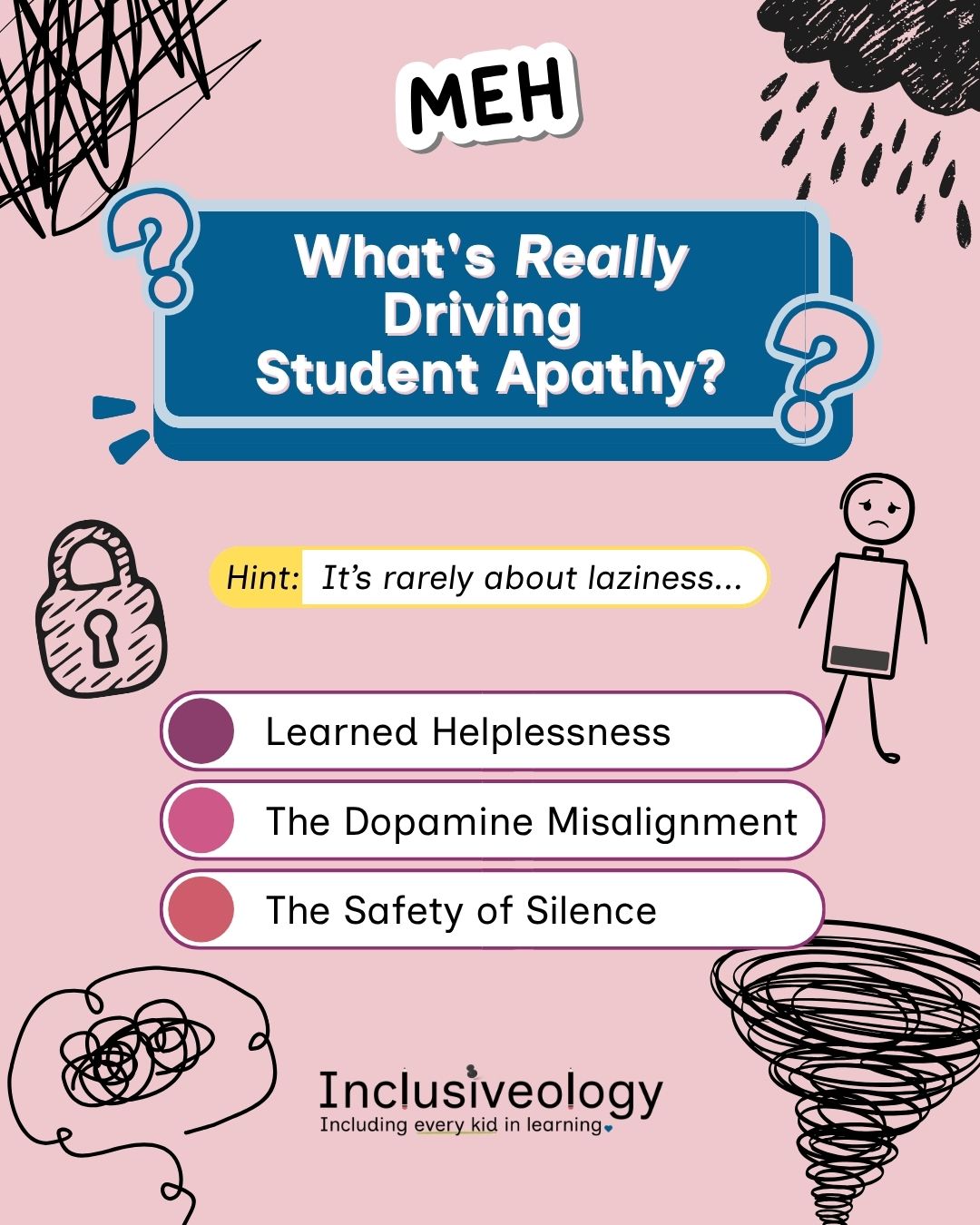
- Learned Helplessness: When students feel their effort does not change their outcome, they stop exerting it. This works like a form of energy conservation inside a system where effort has stopped paying off.
- The Dopamine Misalignment: We ask students to find joy in the productive struggle of a math problem while their brains are calibrated for the instant, high frequency rewards of social algorithms.
- The Safety of Silence: Without a deep sense of belonging, participating becomes an emotional risk. Apathy acts as a shield, protecting a student from embarrassment or rejection by removing the option to care.
Shifting Instruction From Compliance to Agency
Removing this barrier calls for a shift away from an industrial model, where students consume and educators talk, toward a facilitator model, where students contribute and educators guide. Here are three shifts worth trying.
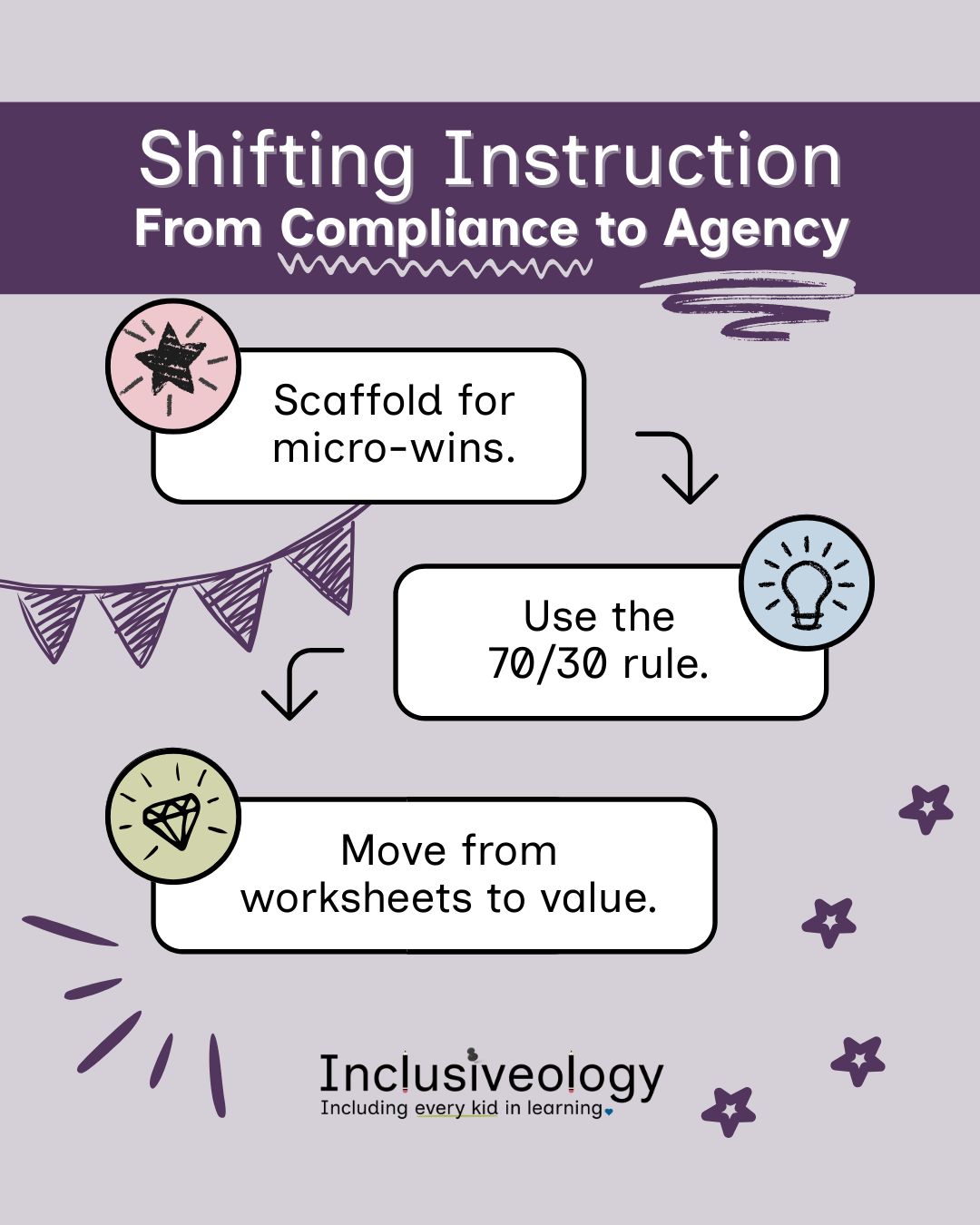
- Scaffold for micro-wins. Break large projects into 24-hour milestones. Apathy thrives on big-picture overwhelm, so frequent, small moments of success help recalibrate a student’s belief that their effort matters. Neurodivergent learners especially benefit from big tasks broken into digestible steps.
- Use the 70/30 rule. Keep 70% of a task inside a student’s comfort zone and let 30% provide the stretch. This balance heads off the frustration that leads to shutting down.
- Move from worksheets to value. Replace “read and answer” with “solve and share” whenever possible. When students see their work connected to something real, like designing a solution for a local community issue, the “why does this matter” defense fades. Sharing and collaborating with peers also gives students a voice and a chance to feel heard and valued.
Student Engagement Strategies to Try This Week
Here are two moves you can make tomorrow to start building engagement and student voice.
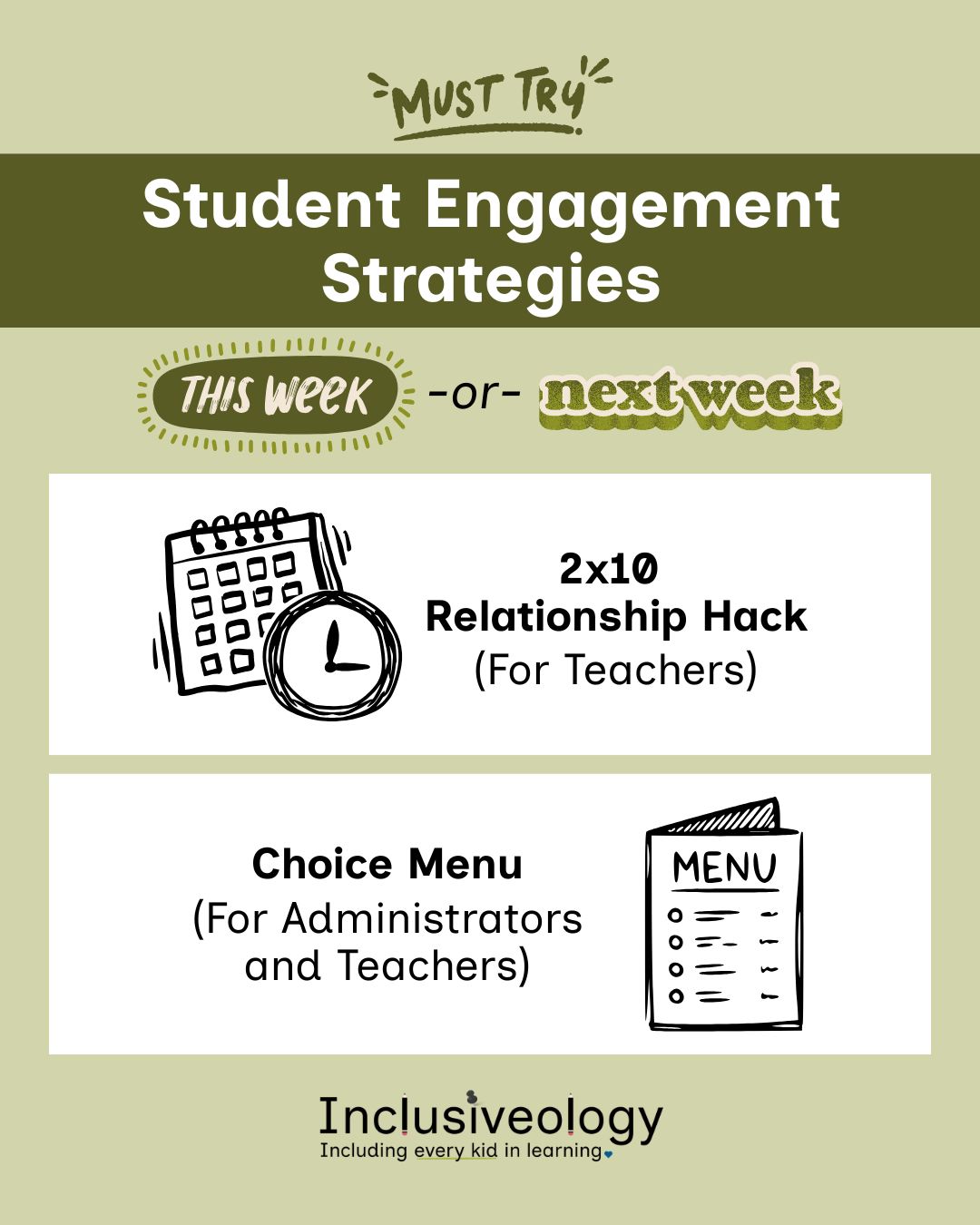
2×10 Relationship Hack (For Teachers)
Identify your most disengaged student. For the next 10 days, spend 2 minutes a day talking with them about anything other than school. This builds the human connection students need to take an academic risk for you on day eleven.
Choice Menu (For Administrators and Teachers)
Consider offering more than one path to mastery instead of defaulting to “the essay” or “the lab report” every time. A learning menu gives students options that feel current and manageable:
- Appetizer: Choose one way to explore the topic (video, text, or mini-lecture).
- Main Course: Choose how to demonstrate mastery (a podcast, a written piece, or a visual model).
- Dessert: One creative reflection.
Add these moves to your toolbox, invite contribution instead of demanding compliance, and see what shifts.
| Want more strategies like these delivered straight to your inbox? Join the Inclusiveology community at Inclusiveology.com/join and get snuggled in with practical support built for real classrooms. 💙 |