Allowing Flexible Ways to Demonstrate Learning: How My Eleventh-Grade ‘D’ Still Shapes How I Teach
Long, long ago in high school, I was quite the introvert. Mostly.
I was quiet and unassuming, except to the people who knew me best. For the most part, I stuck to my own circles, and that suited me just fine.
I did not volunteer to go first, raise my hand, or offer up my ideas. Generally, I was more likely to slink down in my chair, making myself as small as possible, to avoid drawing any attention. I was a smart kid, but I chose to keep my ideas and thoughts to myself.
The Scene
Eleventh grade Advanced English. About twenty of us sat in that class, and because I was quiet and unassuming, I had the honor of sitting directly in front of Mr. O’Connor.
Today, that seat would be called preferential seating…
I suppose he wanted to make sure he had my attention. How could he not? I was close enough to see the coffee stains on the front of his shirt, which was almost a daily occurrence.
Then came our next assignment: a book report.
This was right up my alley. I have always loved to read and write, and this time, we could pick whatever book we wanted.
But there was a catch. (Insert Jaws theme here…)
Along with the written report, we had to present it out loud, to the entire class.
Quiet, unassuming me was concerned. How was I ever going to do that?
I quickly decided that I wasn’t. I was not going to stand in front of the class and share my work.
Today’s the Day
Fast forward to the day my assignment was due. My report was delightfully crafted in APA format, and I was sure of an A.
As each of my classmates walked to the front of the room and stood next to the blackboard (it was the 80s), my anxiety climbed. I dreaded hearing my name called.
When Mr. O’Connor said, “DJ, it’s your turn,” I sat there. Right in the front row. Slinking down in my chair once again, making myself as small as possible, to avoid drawing any attention.
Mr. O’C: “Come on. It’s your turn.”
Me: “No.”
Mr. O’C: “No?”
Me: “No.”
Long story short, I got an A on my book report. That was a win.
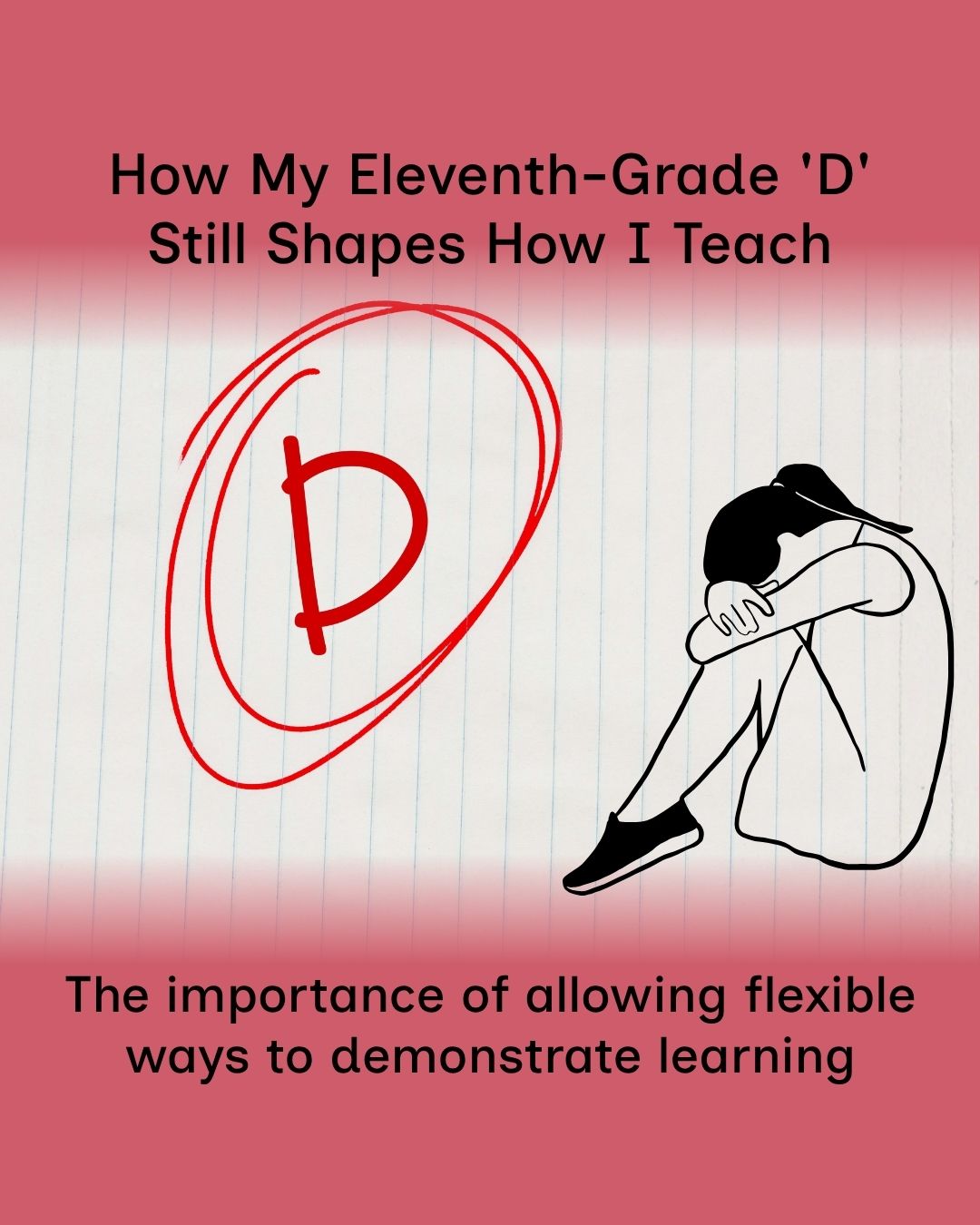
I got an F for not sharing it at the front of the class. That was a loss, and it was enough to pull my grade for the whole assignment down from an A to a D.

Why This Still Happens
This memory is decades old, but the practice it describes, insisting that every child do every part of an assignment the same way, is still common in classrooms today.
What was the actual learning goal for that assignment? Was it to see if I understood the book? Or was it to see if I could present in front of my peers? Those are two very different learning outcomes, and only one of them was on the syllabus.
Flexible Ways to Demonstrate Learning
When students have flexible ways to demonstrate learning, assignments start measuring what they’re supposed to measure: understanding, not comfort with public speaking. Here are a few places to start.
- Decide what the learning outcome actually is. What do you want students to know, and what do you want them to be able to do by the end of the assignment?
- Give kids options for how they represent and express their knowledge.
- Build in flexibility as a starting point, not an accommodation you add later.
- Support kids in growing their confidence at their own pace.
- Recognize that kids are changing, and teaching and learning should change with them.

What This Means for Kids Today
Getting a D on that assignment was upsetting. Being put in an uncomfortable, stress-inducing position was worse. This happened decades ago, and I’m still telling the story.
Kids should never drop from an A to a D simply because they’re quiet and unassuming. I’ll stand on that all day long.
| If you’re ready to build more flexible ways to demonstrate learning into your classroom, come get snuggled in with the Inclusiveology community. Inclusiveology.com/join 💙 |