Alternative Assessment for Struggling Readers: Leo’s Science Story
Alternative assessment for struggling readers gives kids a real chance to show what they know, even when reading and writing get in the way. Leo, a 5th grader who struggled significantly with reading decoding and fluency, is proof of exactly that.
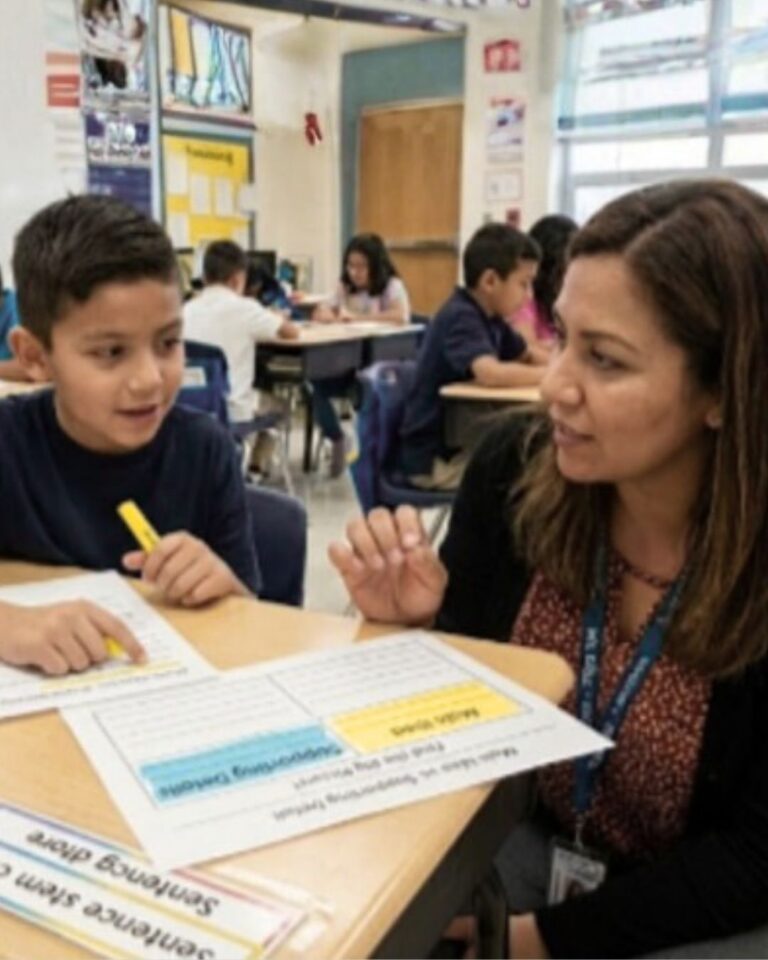
I was coaching one of my 5th grade teachers, and her goal was clear: capture content knowledge for the students reading below grade level, the ones who struggled with content vocabulary, multi-syllabic words, and fluency. We centered our attention on Science.
When a Written Test Measures Reading, Not Science
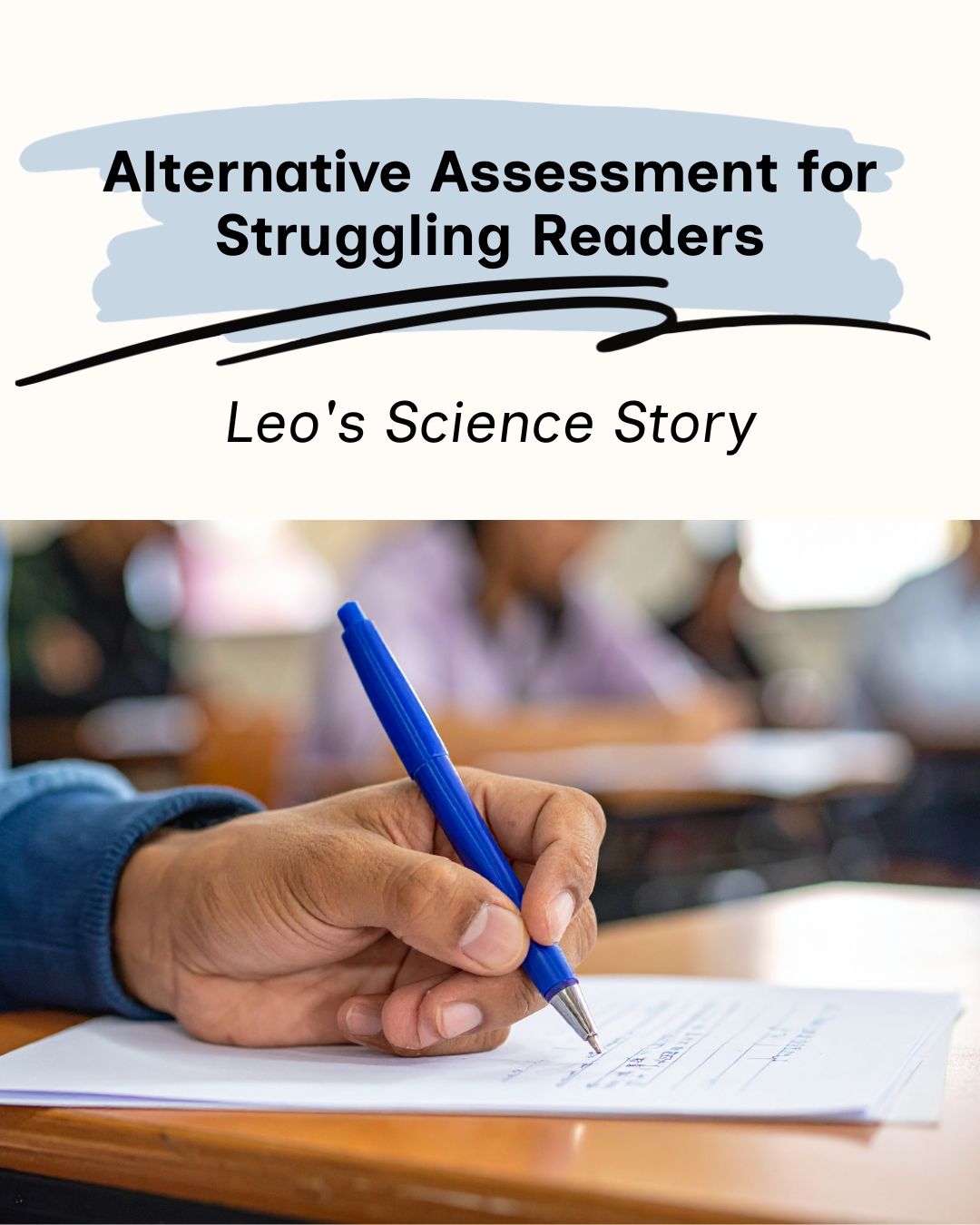
The week before, students took a written chapter test on ecosystems. Since the assessment relied heavily on reading comprehension and written expression, Leo failed it.
Here’s what made that so frustrating: during class discussions and hands-on experiments, Leo was the first student to correctly predict how introducing a new predator would change a food web. I could see his excitement building every time we got into the content.
Leo clearly knew the material. The written test just wasn’t built to show it.

When a student reads below grade level, a traditional assessment often measures reading ability more than instructional content knowledge. Getting an accurate picture of what a student knows means decoupling the assessment of content from the mechanical act of reading and writing.
Redesigning the Assessment Around Leo’s Strengths
The objective stayed the same for every student: demonstrate an understanding of how energy flows in an ecosystem, and predict how introducing a new predator (a wolf) would affect an existing food web (deer), including the resulting change in the deer population.
For Leo, we shifted how he could show that understanding.

Instead of writing about the ecosystem, Leo built a digital model and narrated the changes out loud. Using Padlet, he dragged images of the organisms (wolves, deer, grass, and more) into place and drew arrows to map the energy flow before the predator was introduced. A peer then dragged the wolf into the food web to disrupt it.
Leo turned on Padlet’s screen record and microphone feature to capture his thinking. Using the laser pointer tool, he circled the animals that would be eaten and explained it in his own words: “Since the wolves eat deer, the deer population will go down. Because there are fewer deer, the grass might grow taller because fewer animals are eating it.”

The Result
Leo nailed it. He fully demonstrated his understanding of energy flow, predator impact, and population change, using a format built around his strengths instead of his struggles.
This is bigger than one student’s win. It’s a glimpse into new possibilities for how learners can show what they know in content area subjects, without reading comprehension or writing standing in the way.
A student’s reading score can stay separate from their science score. Offering choice and using technology to bypass decoding gives us a much clearer picture of what kids actually know. Shifting the approach is what lets us see the student’s real knowledge.
Ways to Try This in Your Own Classroom
- Separate the content standard from the literacy skill before you build the assessment, so you know exactly what you’re measuring.
- Offer a menu of ways to demonstrate understanding: oral narration, digital models, drawings with verbal explanation, or recorded video.
- Use tools already in your classroom, like Padlet, screen recording, or a microphone, to capture thinking without requiring writing.
- Pair students for part of the task (like introducing the disruptor) to build in collaboration alongside independent thinking.
Join the Inclusiveology Community

| Want more real classroom strategies like this one? Inside the Inclusiveology Community, you’ll find the instructional model, assistive tech tips, and coaching support to help every learner in your classroom, including your Leos, show exactly what they know. Join the Inclusiveology Community 💙 |