Executive Functioning Strategies for the Classroom
When we invest in high-quality core instruction, we are doing more than delivering content. We are actively building the foundational executive functioning (EF) skills that determine a student’s success across their entire academic life, and executive functioning strategies for the classroom are one of the most reliable ways to get there.
Let’s be honest: there are many students who struggle with this very thing. In these last couple of years, supporting executive functioning skills has been a big focus of my instructional coaching.
What Is Executive Functioning?

If you’re unfamiliar with executive functioning, these skills are the brain’s “control tower.” They include the ability to plan, organize, manage time, switch focus, and regulate emotions. For students who struggle with EF, and many who require Tier 2 or Tier 3 support often do, the greatest intervention is a Tier 1 classroom that is already designed to support and strengthen these skills.
When we make EF-boosting strategies a universal part of our instruction, students with identified disabilities feel supported, and all students gain important cognitive tools to go deeper with their learning.
Making EF-Improving Strategies Part of All Instruction
Earlier this year, I supported Ms. Heather, a 4th grade teacher, in her Tier 1 instruction. When we sat down to discuss a possible goal for our coaching, everything pointed to greater supports for executive functioning. So many of her students struggled with organization and time management. Ms. Heather was concerned that their learning, and their thinking, would stay surface level rather than grow complex and critical.
Our first goal was to adjust her instruction to minimize EF challenges and maximize student independence and critical thinking. For more on the instructional model behind this approach, see our post on the Gradual Release Model of Instruction.
Organizing Thoughts and Actions
Two of the biggest EF hurdles her students had were organization and task initiation. Students struggled to start because the task felt overwhelming. Ms. Heather and I fixed these with simple tools.
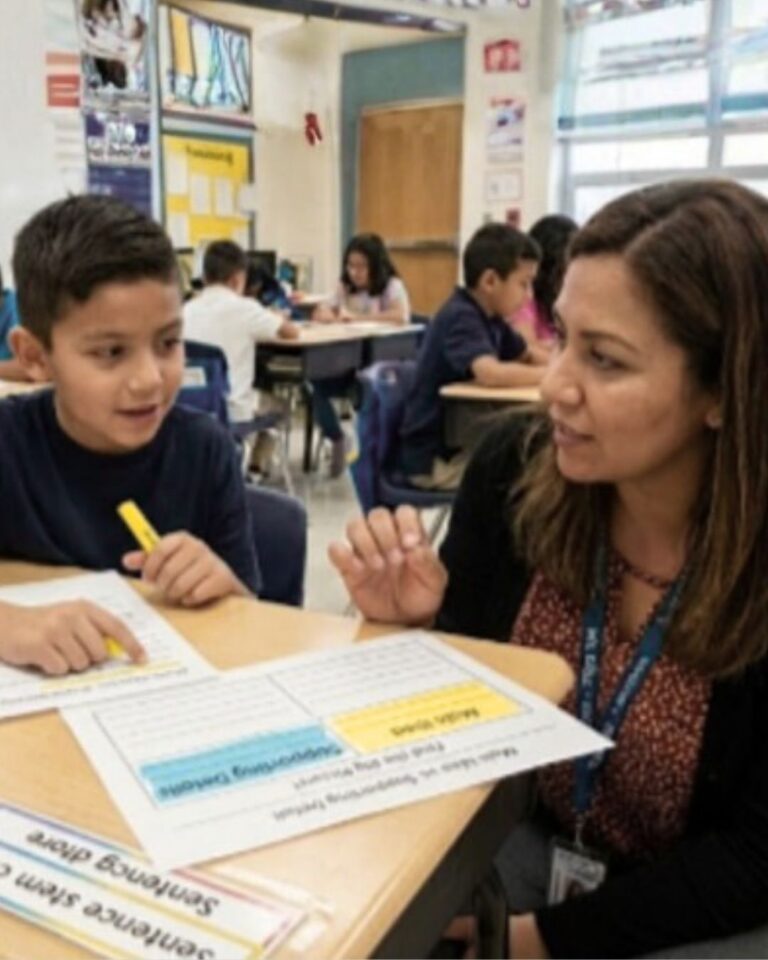
Graphic organizers as cognitive scaffolds. Instead of just telling students to take notes or plan a report, Ms. Heather provided graphic organizers for every major assignment. For a lesson on finding the main idea and supporting details, she used a “Main Idea/Details” template. This external structure held the thinking process for the student, reduced the demands on working memory, and allowed the student to focus their mental energy on the task itself rather than on organization.
Checklists for breaking down complexity. To tackle large assignments, she used task checklists and focus trackers posted near the assignment submission tray on her desk. This helped students with planning and self-monitoring. The project checklist included: “1. Complete paper/paragraph organizer. 2. Write a rough draft. 3. Peer edit. 4. Final submission.” This turned a daunting task into a series of achievable, sequential steps, making the work manageable.

Mastering Time and Transitions
Difficulties with time management and attentional control are classic EF struggles. I coached Ms. Heather on how to use visual cues to make the invisible visible.
Visual timers. A prominent visual timer, showing the time decreasing, was used for all work blocks longer than five minutes. This universally adopted tool allowed students to self-regulate and manage their focus without Ms. Heather having to verbally intervene. It provided a constant, non-verbal cue that helped students internalize the passage of time.
Supporting transitions. Her class schedule was clear and visible. More importantly, she used explicit instruction for transitions. She taught a transition routine: “Clear your desk (30 seconds), stand quietly behind your chair (15 seconds), move to your next location when your group is called.” This consistent routine minimized chaos and the EF demand of switching between activities, and it supported students who struggle with cognitive flexibility.
Did These EF Supports Make a Difference? Yes.
Ms. Heather maximized learning for all students by teaching critical life skills, executive functioning among them, alongside core content. She created a truly inclusive environment where students who needed specific EF supports weren’t singled out. All students found success because the “accommodations” were simply how the class operates.

| Ready for more classroom-ready tools like these? Join Inclusiveology and get access to a full toolbox of strategies, templates, and coaching support built for teachers who want every kid included in learning. 💙 |