The Gradual Release Model of Instruction
You taught the lesson.
You explained it clearly, checked for understanding, and answered every hand that went up.
And still… some kids didn’t get it.
Not because they weren’t trying. Not because you weren’t trying. But because explaining something, even really well, isn’t the same as teaching someone how to do it.
This is one of the most common gaps in K–12 classrooms, and it’s not a reflection of your effort or your students’ ability. It’s a structural problem. And structural problems have structural solutions.
Enter the Gradual Release Model of Instruction.
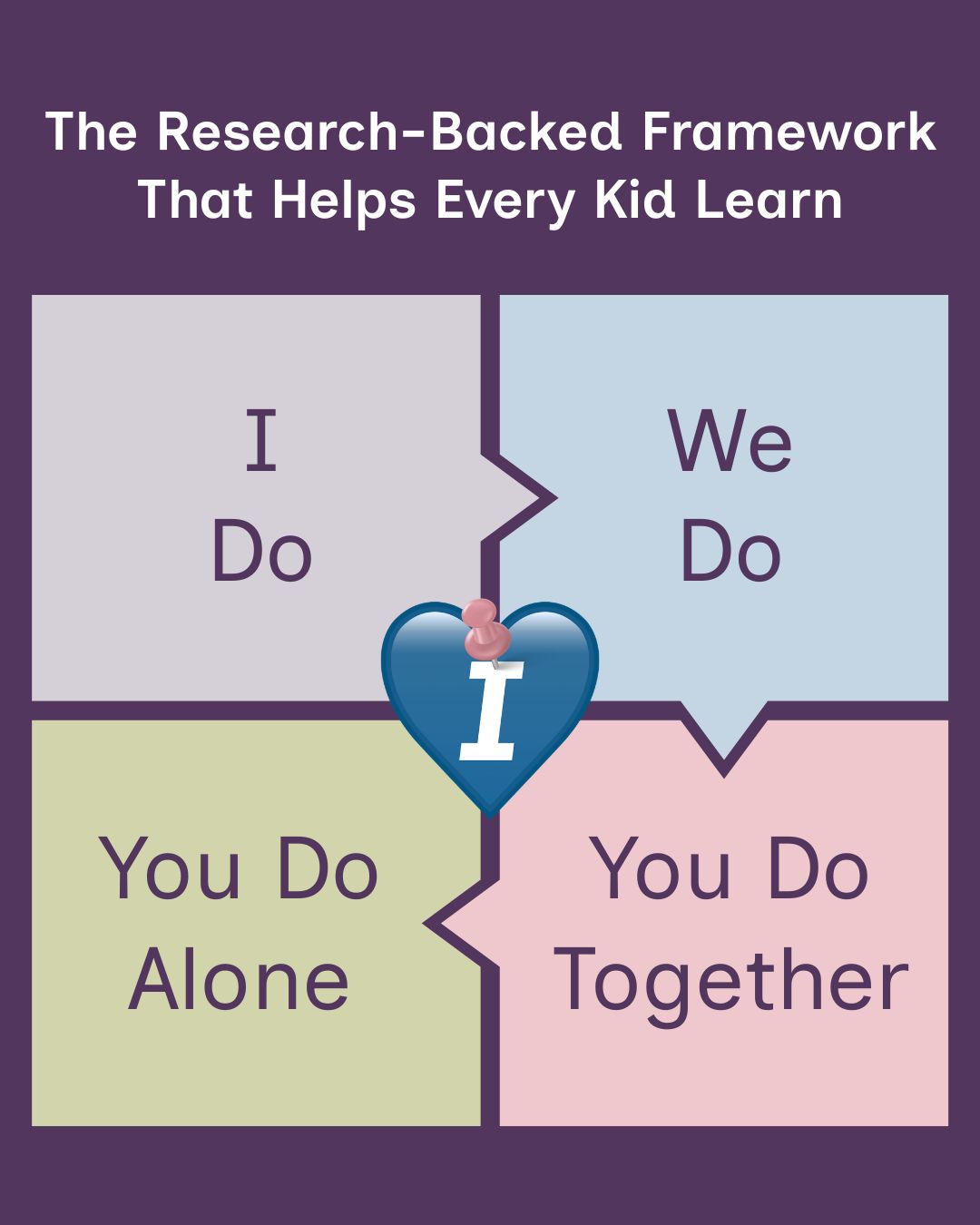
The Gradual Release Model of Instruction (often called the GR Model, or the “I Do, We Do, You Do” framework) is one of the most research-backed instructional frameworks in education. It works by intentionally and systematically shifting the cognitive load from teacher to student. Moving from explicit modeling all the way to full student independence, with carefully structured practice in between.
In other words, it’s the difference between showing kids what to do and actually building the skills they need to do it themselves.
After 20+ years in classrooms and over a decade coaching and training educators across public, charter, and private schools, I can tell you: this model isn’t just effective for the “average” learner. When it’s implemented well, the Gradual Release Model of Instruction is one of the most powerful tools a teacher has for reaching every kid in the room – including neurodivergent learners, students with disabilities, English Language Learners, and students who have been quietly falling through the cracks for years.
You’re about to learn:
- What the Gradual Release Model of Instruction actually is,
- What the research says about why it works,
- How each phase shows up in a real classroom, and
- How to use it as a framework for inclusive, student-led learning from kindergarten all the way through 12th grade.
What Is the Gradual Release Model of Instruction?
The Gradual Release Model of Instruction is a research-based framework that moves students through a structured progression of learning, from teacher-led instruction to full student independence. It was first introduced by Pearson and Gallagher in 1983 and later expanded by education researchers Douglas Fisher and Nancy Frey, whose work brought the model into mainstream classroom practice across grade levels and content areas.
The core idea is straightforward:
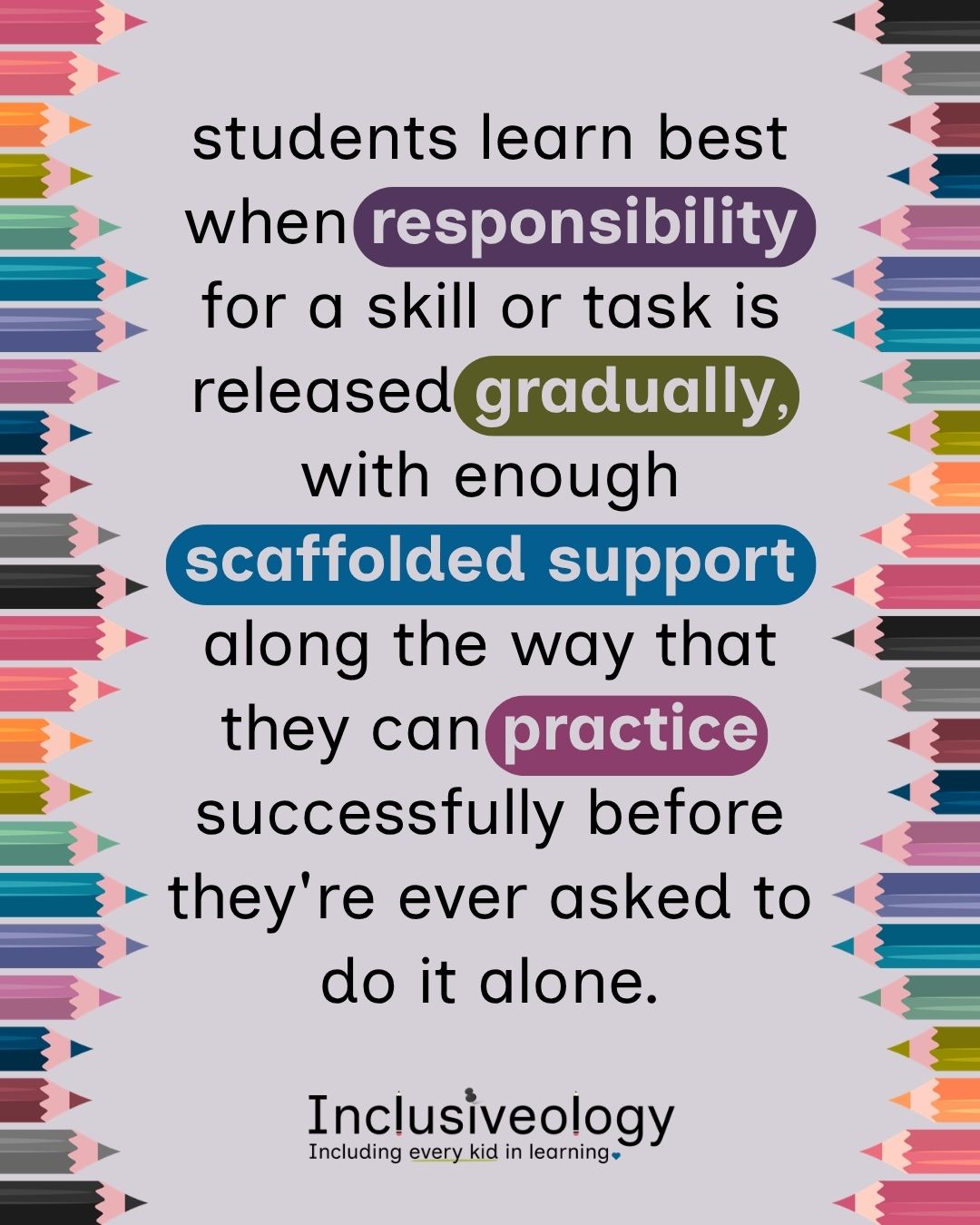
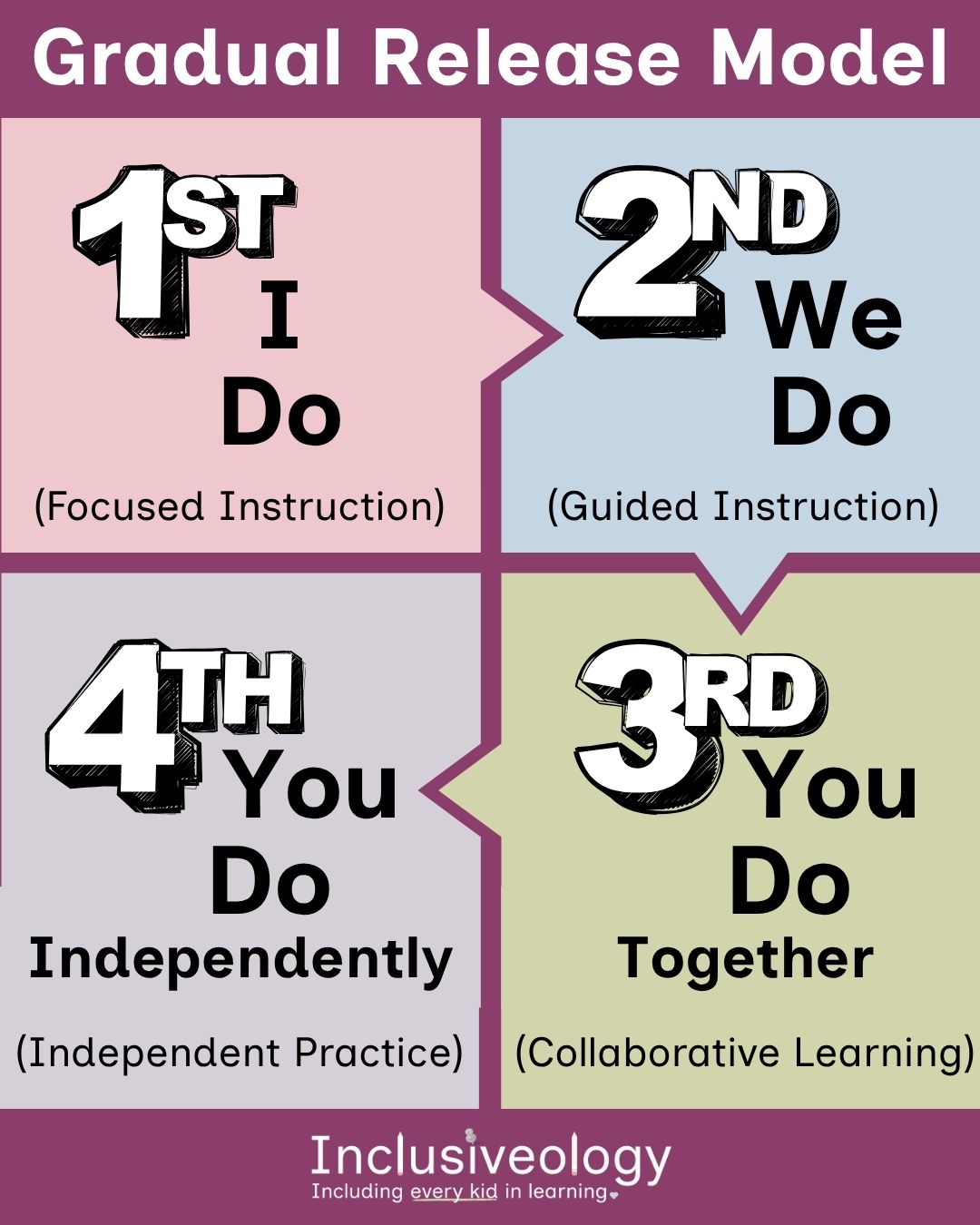
The model is often summarized as “I Do, We Do, You Do.” The full framework has four distinct phases:
- I Do (Focused Instruction): The teacher models the skill, thinking aloud through the process so students can see not just what to do, but how and why.
- We Do (Guided Instruction): The teacher and students work through the skill together, with the teacher providing prompts, feedback, and support in real time.
- You Do Together (Collaborative Learning): Students practice the skill with peers, building confidence and independence before working solo.
- You Do Independently (Independent Practice): Students demonstrate the skill on their own, with the teacher’s role shifting to observation and informal assessment.
The Gradual Release Model of Instruction is not a rigid, one-lesson script. It’s a flexible framework. Depending on the complexity of the skill and the needs of your learners, you might move through all four phases in a single lesson. Or you might spend several days in the “We Do” phase before anyone is ready to work independently. That flexibility is a feature, not a flaw.
This model is not only for struggling learners or students who need intervention. It is a Tier 1 best practice, meaning it’s designed for every student in every classroom. When used with an inclusive lens, it becomes one of the most effective tools a K–12 teacher has for making sure no kid gets left behind in the learning process.
Why the Gradual Release Model of Instruction Works – Especially for Diverse Learners
The research behind the Gradual Release Model of Instruction isn’t new, and it isn’t thin. Decades of study in cognitive science and education have consistently pointed to the same conclusion: students retain more, perform better, and develop genuine independence when instruction is structured, scaffolded, and intentionally released over time.
At the heart of it is a concept called cognitive load theory. When students are asked to take on a new, complex skill all at once, the brain can only hold so much. Overwhelm sets in, errors get practiced instead of corrected, and the learning doesn’t stick. The Gradual Release Model of Instruction works precisely because it breaks that cycle. By moving slowly and deliberately from modeling to guided practice to collaborative work to independence, it gives the brain the time and structure it needs to process, rehearse, and own new skills.
This is especially significant for neurodivergent learners, students with disabilities, and others who have traditionally been underserved by “explain and assign” instruction. Many neurodivergent learners struggle with implicit learning, meaning they don’t automatically pick up on the unstated rules, processes, or thinking behind a task the way some of their peers might. When a teacher skips straight from modeling to independent practice, these students are often left filling in the gaps on their own… and struggling silently because of it.
The Gradual Release Model of Instruction removes that guesswork. Each phase builds on the last. No student is asked to perform a skill independently before they’ve had the chance to practice it with support.
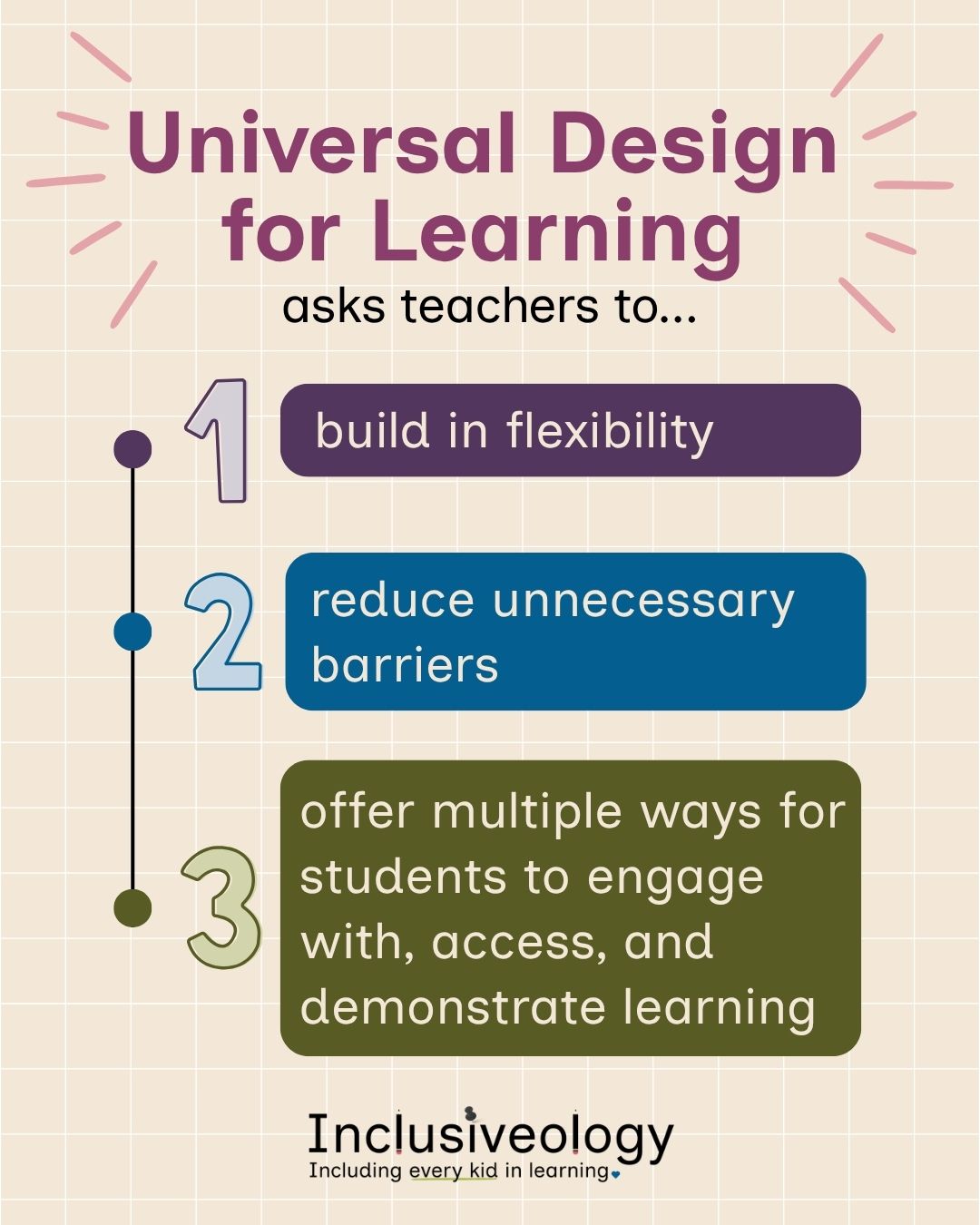
There’s also a powerful connection here to Universal Design for Learning (UDL), the proactive framework for designing instruction that works for all learners from the start. UDL asks teachers to build in flexibility, reduce unnecessary barriers, and offer multiple ways for students to engage with, access, and demonstrate learning. The Gradual Release Model of Instruction is one of the most natural complements to UDL principles because it does exactly that, structurally and by design.
And perhaps most importantly for the teachers reading this: the Gradual Release Model of Instruction isn’t about doing more. It’s about organizing the work you’re already doing into a structure that actually moves kids forward. When the framework is in place, you stop spinning your wheels re-explaining the same concepts, and your students stop practicing the wrong things independently. Everyone wins.
Breaking Down Each Phase of the Gradual Release Model of Instruction
Let’s get into the toolbox. Here’s what each phase actually looks like in a K–12 classroom, why it matters for diverse learners, and how to make it work for every kid in the room.
1. I Do: Focused Instruction
This is where you, the teacher, take center stage… but not as a lecturer. The “I Do” phase is about making your thinking visible.
The goal isn’t just to show students what to do. It’s to verbalize the how and the why behind every decision you’re making. This is called a think-aloud, and it’s one of the most powerful instructional moves in your toolbox. Instead of saying “watch me solve this problem.” You’re saying “here’s what I notice, here’s what I’m thinking, here’s why I’m making this choice.” You’re narrating the cognitive process, not just the steps.
This distinction matters enormously for neurodivergent learners. Many students with learning disabilities, ADHD, or autism spectrum differences struggle with implicit learning. They don’t automatically absorb the thinking process behind a task just by watching it happen. When the “I Do” phase is done well, with explicit metacognitive narration, it removes the guesswork that so often leads to anxiety and frustration before a student has even picked up a pencil.
A few things to keep in mind during this phase:
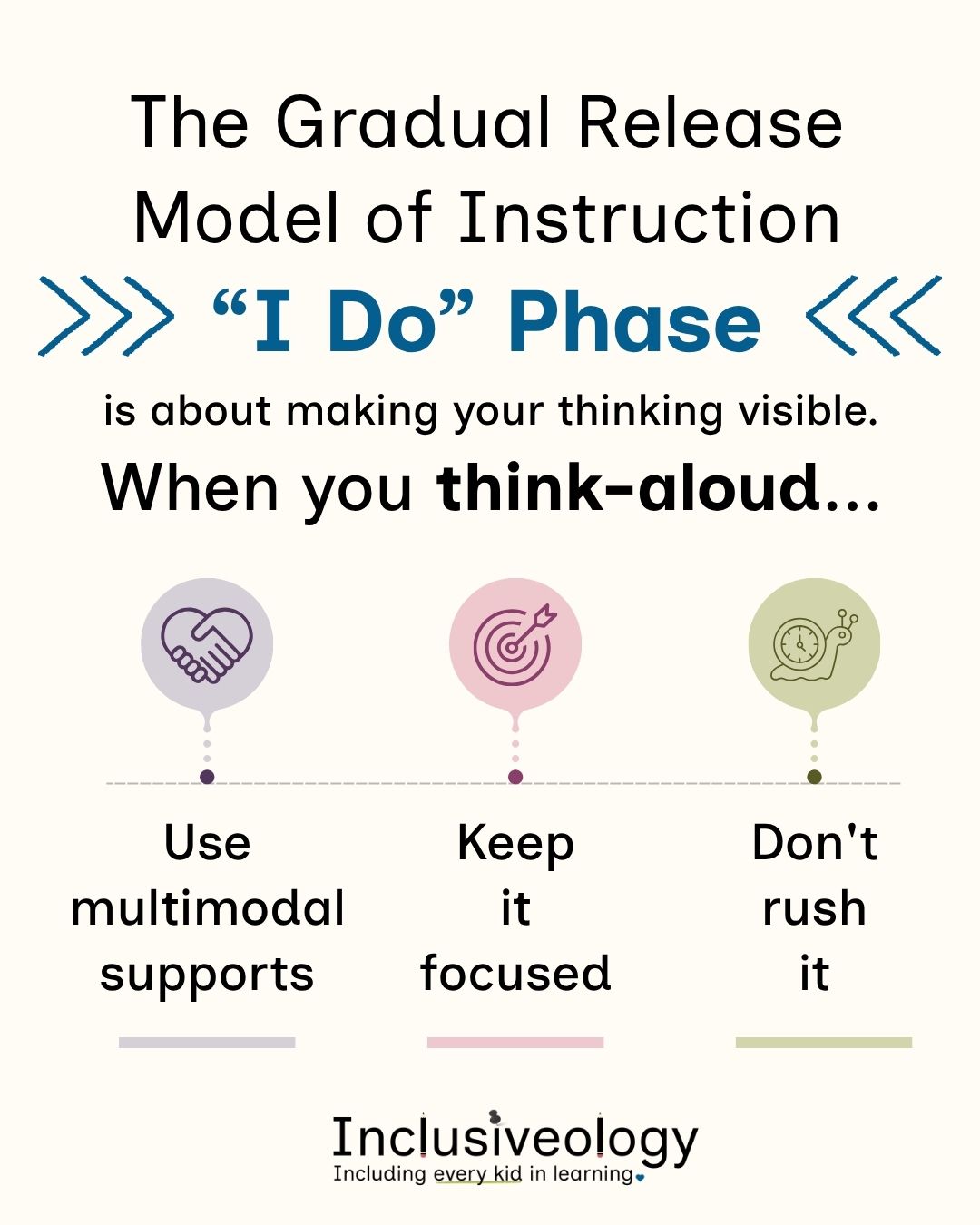
- Use multimodal supports. Pair your verbal think-aloud with visual supports, written steps, or an anchor chart so students have something to reference beyond just what they heard you say.
- Keep it focused. The “I Do” phase should model one clear skill or process at a time. Trying to model too much at once defeats the purpose of reducing cognitive load.
- Don’t rush it. It can feel like modeling is “taking time away” from student practice. It isn’t. A strong “I Do” saves you from reteaching the same concept three times later in the week.
2. We Do: Guided Instruction
This is where the real magic happens, and also where a lot of teachers accidentally skip ahead too fast.
The “We Do” phase is not independent practice with the teacher nearby. It’s active, collaborative work between you and your students, where you are still very much in the mix: prompting, questioning, clarifying, and adjusting in real time.
This is the phase where you pull small groups. Where you ask “what are you noticing?” instead of “did you get the right answer?” Where you catch errors before they become habits.
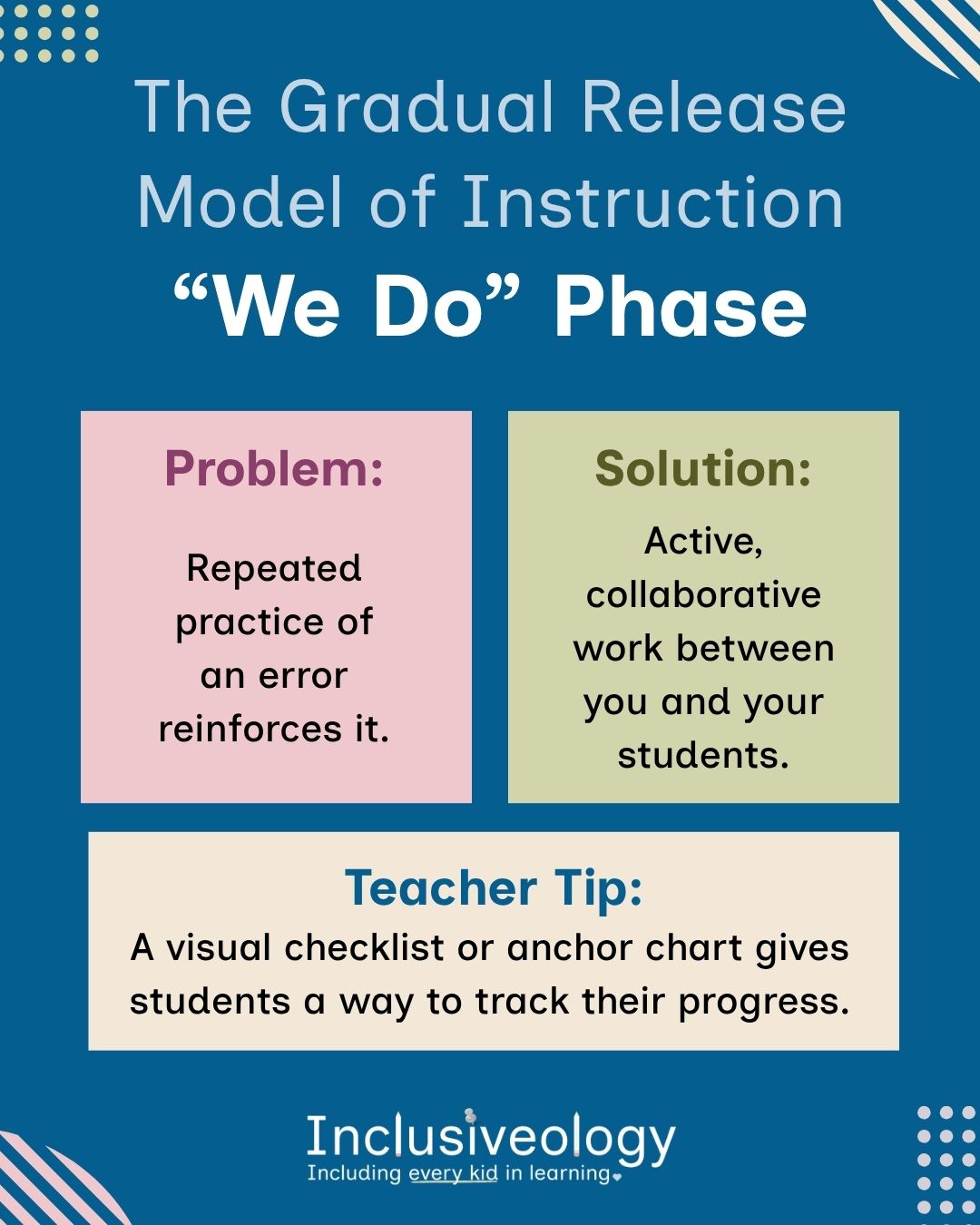
For students with learning disabilities or executive function challenges, this phase is critical. When learners are left to practice unsupported too soon, they often practice the wrong thing. And repeated practice of an error reinforces it. The “We Do” phase creates a monitored environment where corrective feedback happens immediately, before a mistake becomes ingrained.
This is also the phase with the most built-in flexibility for differentiation. You can hold certain students or groups here longer while others move forward, run multiple “We Do” cycles for kids who need more repetition, and use paired or small-group structures so that peers become part of the feedback loop too, reducing the pressure on you as the sole support in the room.
Teacher tip: a visual checklist or anchor chart during this phase gives students a way to track their own progress through the steps. For neurodivergent learners especially, that visible structure reduces anxiety and supports task initiation.
3. You Do Together: Collaborative Learning
This phase is the most frequently skipped in K–12 classrooms, and that skip is costing students more than most teachers realize.
The “You Do Together” phase sits between guided instruction and full independence. Students work with a partner or small group to practice the skill with minimal teacher support. The teacher’s role here shifts to monitoring, observing, and stepping in only when necessary.
Why does this phase matter so much? Because independence isn’t a switch you flip. It’s a bridge you build. Asking students to go from “we just did this together” straight to “now do it alone” removes a critical layer of scaffolding, especially for learners who need more repetition, more processing time, or the low-stakes safety of a peer before they can perform confidently on their own.
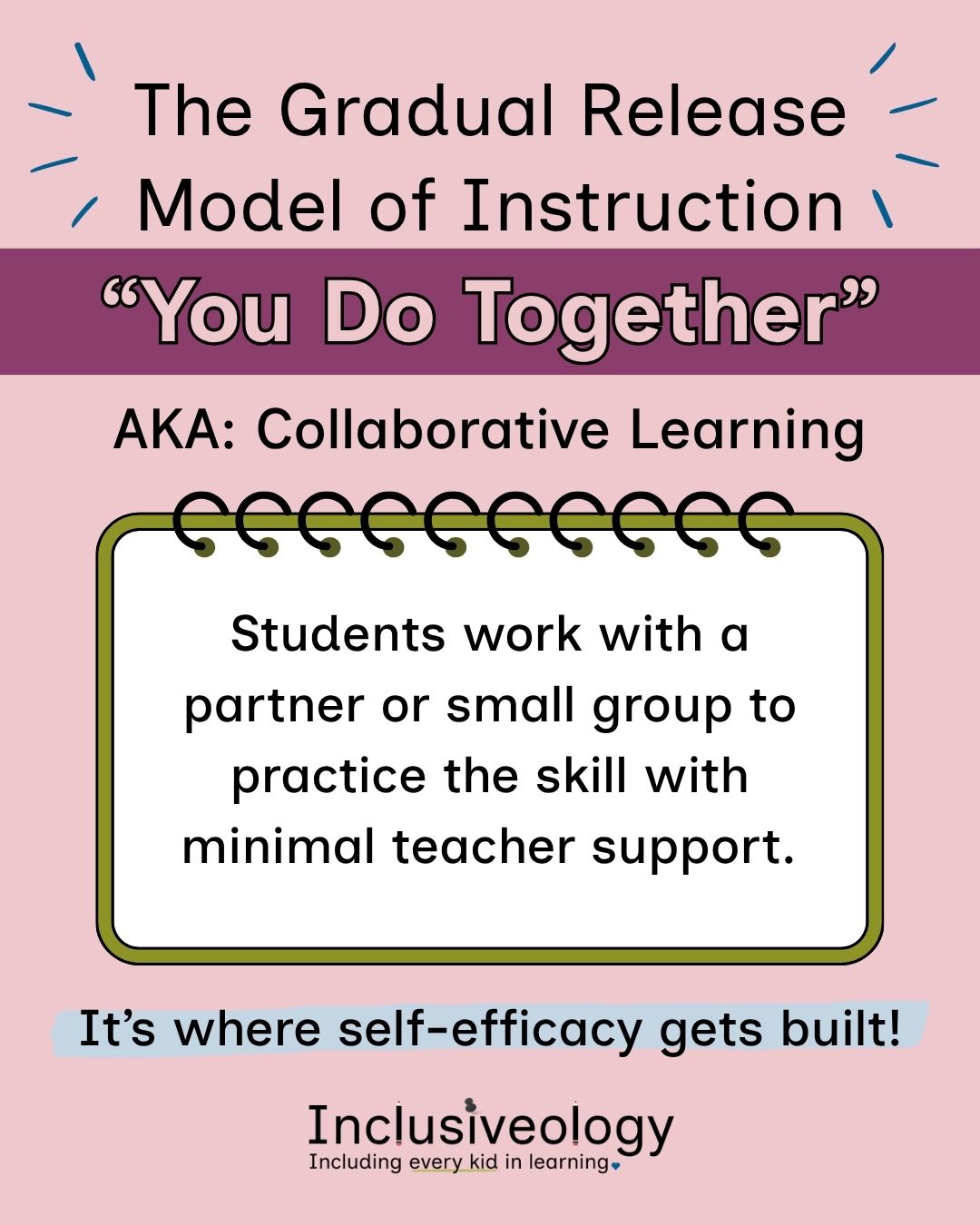
For neurodivergent learners, the “You Do Together” phase is where self-efficacy gets built. Success in a supported, peer-based environment builds the confidence students need to take on the independent task that comes next. It’s also another opportunity for you to observe and make any adjustments, whether that means a quick reteach, a reframe, or a small clarification for a student or group who isn’t quite ready to move forward yet.
Intentional grouping matters here. Think about pairing students in ways that feel supportive rather than hierarchical, and consider providing a toolbox of resources, such as notes, graphic organizers, and sentence starters, that students can access during this phase and carry into independent practice.
4. You Do Independently: Independent Practice
This is the goal. But it’s only meaningful if the previous three phases have done their job.
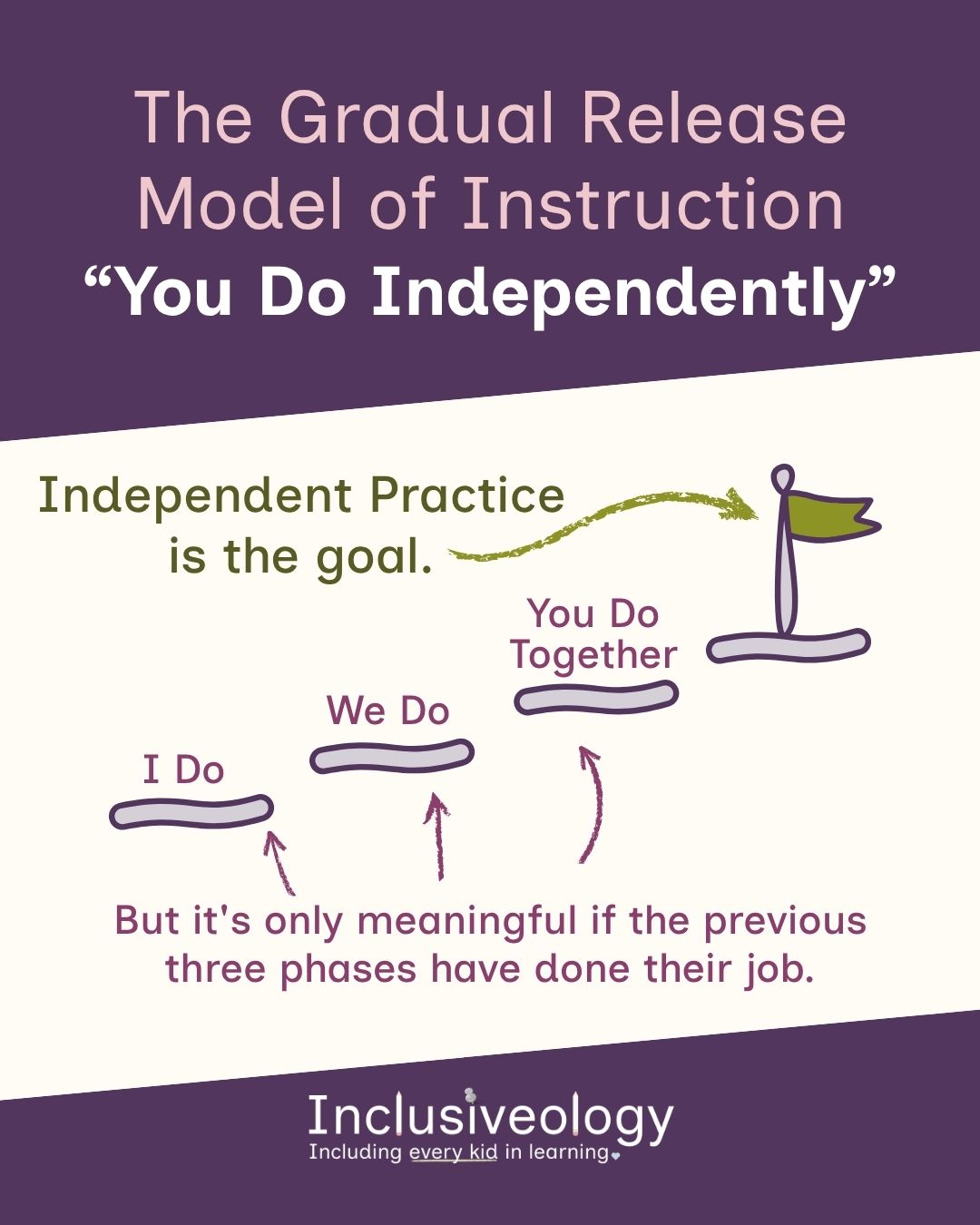
The “You Do Independently” phase is when students demonstrate the skill on their own, without teacher prompting or peer support. Your role shifts to observation and informal assessment. What you’re looking for isn’t just whether students got the right answer. You’re looking at the process: where are they confident, where are they hesitating, and what does that tell you about what comes next?
A few things make this phase more inclusive and more effective for diverse learners:
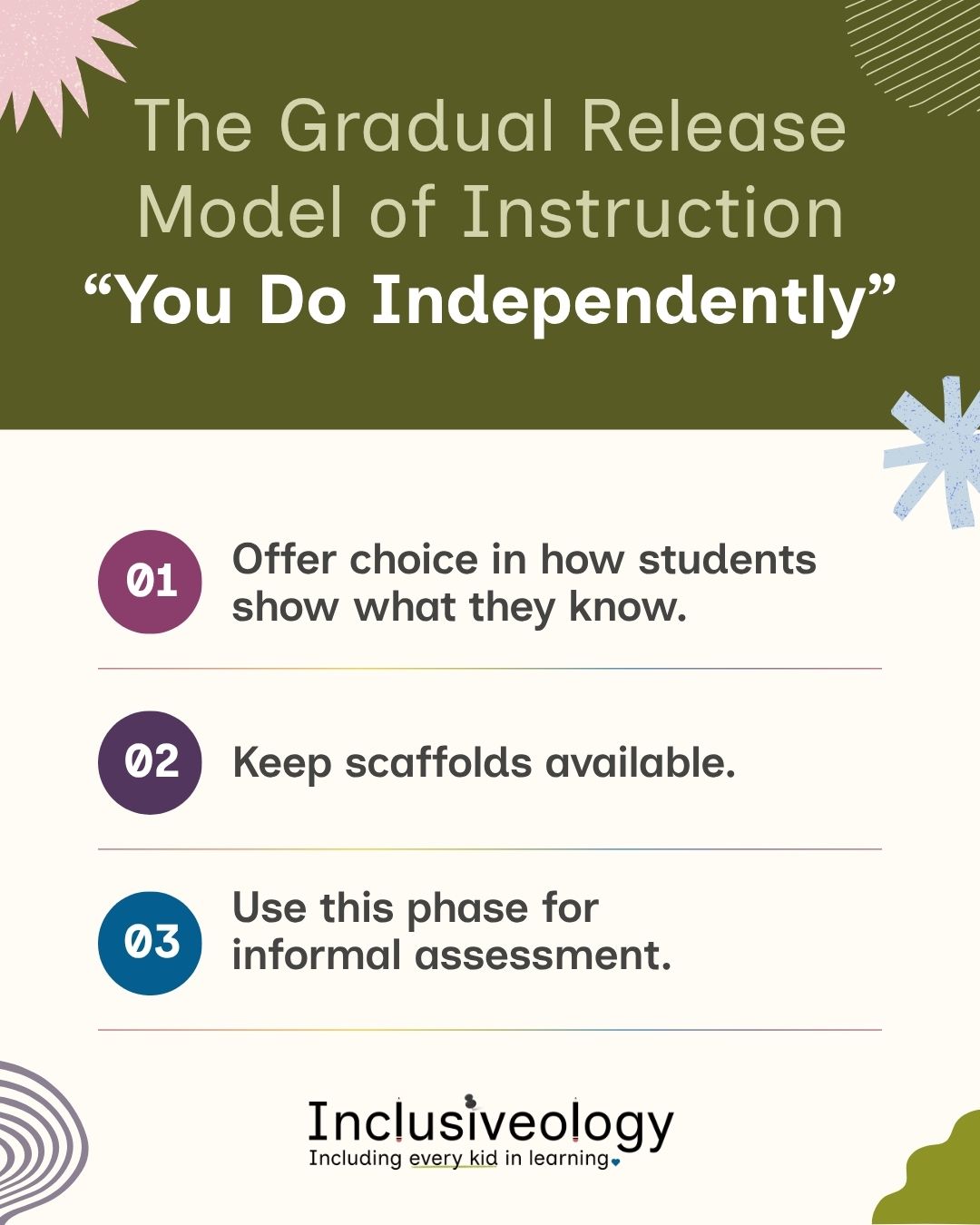
- Offer choice in how students show what they know. This is a direct connection to UDL’s principle of multiple means of expression. Some students demonstrate mastery beautifully in writing. Others do it better through speech, drawing, building, or showing their work in an alternative format. Holding every student to the same output method isn’t rigor. It’s a barrier.
- Keep scaffolds available. Notes, graphic organizers, and assistive technology supports are not cheating. They are tools, and they belong in the toolbox. A student who uses text-to-speech to complete an independent task has demonstrated the skill. That’s a win.
- Use this phase for informal assessment. What you observe during independent practice should directly inform your next instructional decision: who needs a small group reteach, who is ready to go deeper, and who might benefit from another round in the “You Do Together” phase before moving on.
The goal of the “You Do Independently” phase, and honestly the goal of the entire Gradual Release Model of Instruction, is genuine student independence. Not compliance. Not the appearance of mastery. Real, confident, self-directed learning. That’s what we’re building toward, for every single kid in the room.
What Gets in the Way (And How to Work Through It)
If the Gradual Release Model of Instruction is this effective, why isn’t every K–12 classroom already using it consistently?
Honestly… Because teaching is layered, complex, and exhausting. And when you’re working through a packed pacing guide, managing a room full of kids with wildly different needs, and trying to keep up with everything else on your plate, a structured instructional framework can start to feel like one more thing to implement rather than the system that makes everything else easier.
Here are the most common barriers teachers run into, and a more solution-centered way to look at each one.
“I don’t have enough time.”
This is the number one objection, and it makes complete sense on the surface. Moving through four phases of instruction feels like it takes longer than just explaining and assigning.
But here’s the reframe: the Gradual Release Model of Instruction doesn’t add time to your teaching. It reorganizes the time you’re already spending. Think about how many minutes get lost to re-explaining concepts, redirecting students who are practicing independently but doing it wrong, or pulling kids back into small groups to reteach something that didn’t stick the first time. That’s the real time drain. A strong “I Do” and a well-structured “We Do” phase up front saves you from a lot of that cleanup later in the week.
It’s also worth noting that the model doesn’t have to happen in a single lesson. A complex skill might move through the “I Do” phase on Monday, the “We Do” phase across Tuesday and Wednesday, and not reach independent practice until Thursday or Friday. That’s not slow teaching. That’s responsive teaching.
“My pacing guide doesn’t leave room for this.”
Pacing guides are real, and the pressure to cover content is real. But coverage isn’t the same as learning. A student who was “taught” something they never had the chance to practice with support, hasn’t actually learned it, and you’ll end up circling back anyway.
The Gradual Release Model of Instruction is most powerful when it becomes the structure you teach within, not something you add on top of your existing lessons. Once the framework is familiar to both you and your students, the phases start to feel natural rather than effortful. Routines get established. Students know what to expect. And the cognitive load on everyone in the room, including you, decreases.
“I have too many different learners to manage this.”
This one is worth sitting with, because it’s actually an argument for the Gradual Release Model of Instruction, not against it.
While some students are ready to move toward collaborative practice, others can stay in guided instruction longer, getting the additional repetition and support they need without the whole class waiting on them. Clearly labeled work sections, such as “We Do Support,” “You Do with a Partner,” and “Independent Practice,” give students structured, choice-based entry points that honor where they are without making anyone feel singled out.
Built-in differentiation isn’t something you layer on top of the Gradual Release Model of Instruction. It’s already there. You just have to lean into it.
“I’m not sure my students are ready to work independently.”
If this one resonates, it might be a signal that the earlier phases need a little more time and structure before the release happens. And that’s completely okay.
One of the most important things I’ve learned across 20+ years in classrooms and coaching educators is this: the instinct to rush toward independence is understandable, but premature independence isn’t actually independence. It’s just unsupported struggle.
Stay in the “We Do” phase longer when you need to. Add another round of “You Do Together” before asking for solo work. Presume competence, and then build the scaffolded bridge that makes that competence visible.
The Gradual Release Model of Instruction in an Inclusive Classroom
Here’s where I want to go a little deeper, because this is the part that matters most to me.
The Gradual Release Model of Instruction is widely recognized as an effective instructional framework. But what doesn’t get talked about enough is how naturally and powerfully it aligns with the principles of truly inclusive teaching, not as an add-on, not as a modification, but structurally, by design.
Let me explain what I mean.
It starts with presumed competence.
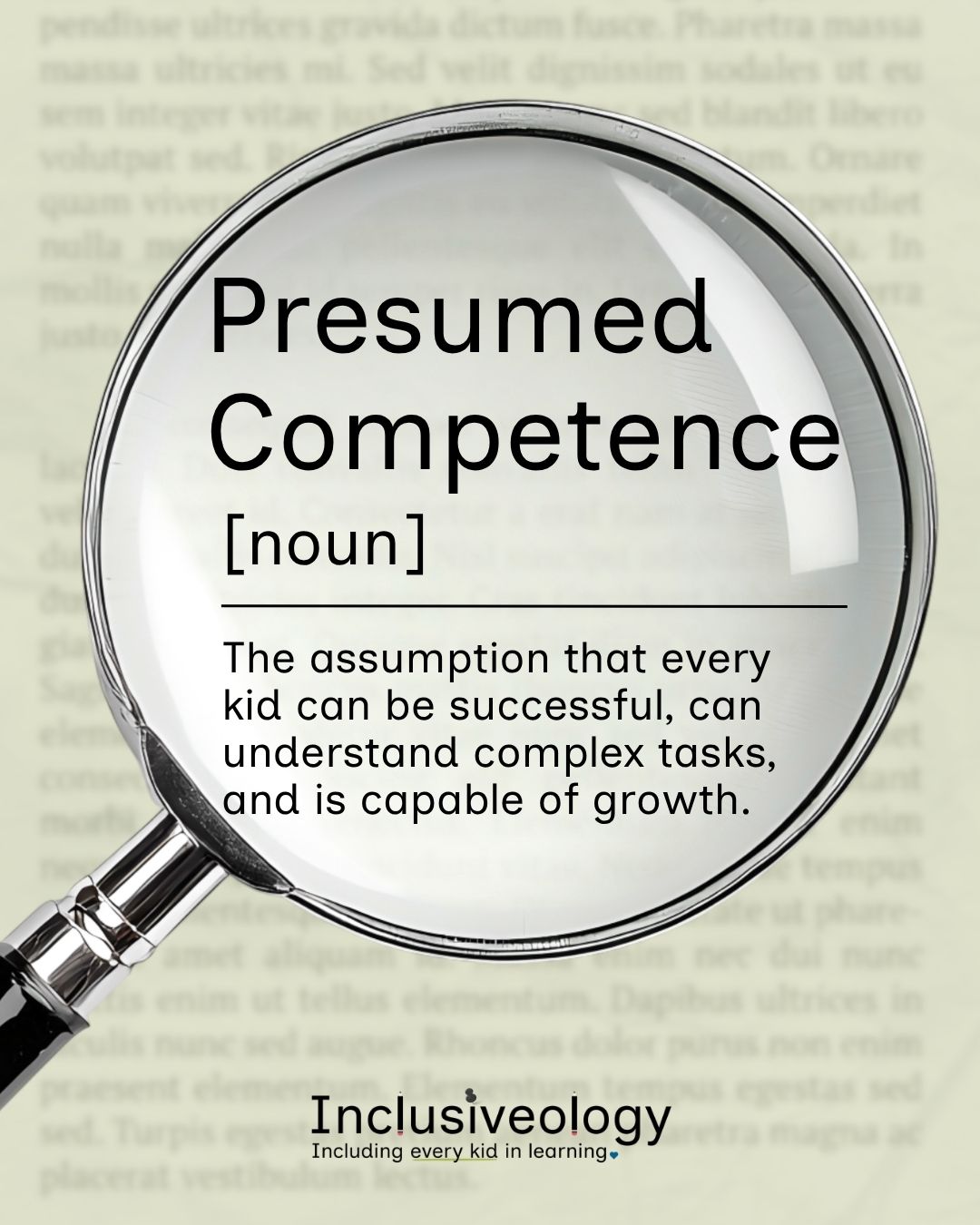
One of the foundational beliefs at Inclusiveology is presumed competence: the assumption that every kid can be successful, can understand complex tasks, and is capable of growth. We don’t wait for students to prove they deserve access to quality instruction. We start there.
The Gradual Release Model of Instruction operationalizes that belief. It doesn’t ask “is this student ready for grade-level content?” It asks “what structure and support does this student need to access it?” That is a fundamentally different question, and it leads to fundamentally different outcomes.
When we presume competence and pair it with a framework that builds scaffolded support into every phase of instruction, we stop sorting kids into “can” and “can’t” and start building the conditions where every learner has a genuine shot at independence.
It works alongside IEP accommodations, not against them.
For students with Individualized Education Programs, the Gradual Release Model of Instruction isn’t just compatible with their accommodations. It’s one of the strongest vehicles for delivering Specially Designed Instruction.
Think about what the model already provides: explicit modeling with metacognitive narration, structured practice with immediate feedback, gradual increases in student responsibility, and multiple opportunities to demonstrate understanding before independent performance is expected. These aren’t just good teaching practices. They are the kinds of intentional, targeted supports that students with disabilities need to close skill gaps and build genuine independence.
The “We Do” phase, in particular, is where IEP accommodations come to life in the most natural way. Extended time, reduced task complexity, visual supports, check-ins, and small group instruction all fit seamlessly into guided practice. You’re not stopping the class to provide accommodations. You’re building them into the flow of instruction for everyone.
It removes barriers for neurodivergent learners at every phase.
Let’s be specific, because the details matter here.
Many neurodivergent learners, including students with ADHD, learning disabilities, and autism, struggle with implicit learning. They don’t automatically absorb the unstated rules and thinking processes behind a task just by observing it. The explicit cognitive modeling of the “I Do” phase directly addresses this by making the invisible visible: the teacher narrates not just what they’re doing, but how they’re thinking and why they’re making each decision.
Transitioning from passive observation to active participation can also trigger executive function challenges, particularly around task initiation. The slow, deliberate movement from “I Do” to “We Do” breaks the learning process into manageable steps, reducing the overwhelm that can shut a student down before they’ve even started.
During the “We Do” phase, immediate corrective feedback prevents errors from becoming habits, which is especially important for students who, when left to practice independently too soon, often rehearse the wrong process and reinforce it. And the “You Do Together” phase provides the scaffolded bridge between guided support and solo performance, a bridge that neurodivergent learners in particular need in order to build the self-efficacy that makes independent work feel possible rather than terrifying.
It connects directly to Universal Design for Learning.
UDL asks teachers to proactively design instruction that works for all learners from the start, offering multiple means of engagement, representation, and expression.
The “I Do” phase naturally incorporates multiple means of representation: verbal think-alouds paired with visual supports, anchor charts, and written steps. The “We Do” and “You Do Together” phases offer multiple means of engagement through collaborative structures, peer feedback, and choice-based entry points. And the “You Do Independently” phase, when implemented with an inclusive lens, invites multiple means of expression: students demonstrating mastery through the format that works best for their brain, rather than a single standardized output.
This is what inclusion actually looks like in practice. Not a separate set of strategies for “those kids.” A single, flexible, research-backed framework that honors the variability in every classroom, and builds the kind of learning environment where every student, regardless of how their brain works, has a real path to independence and confidence.
That’s the vision. And the Gradual Release Model of Instruction is one of the clearest roads to get there.
A Quick-Start Guide: Using the Gradual Release Model of Instruction This Week
Here’s a simple, classroom-ready walkthrough of what the Gradual Release Model of Instruction can look like across a single lesson or a short instructional sequence. Use this as a starting point and adjust for your grade level, content area, and the specific needs of your learners.
A Sample Lesson Walkthrough
Let’s say you’re teaching a reading comprehension strategy: identifying the main idea of an informational text. Here’s how the Gradual Release Model of Instruction moves through all four phases.
Phase 1: I Do Approximate time: 10–15 minutes
Choose a short, accessible text and read it aloud while thinking aloud through your process. Narrate your thinking explicitly: “I’m reading this paragraph and I notice the author keeps coming back to one idea. I’m asking myself, what is this mostly about? I’m going to underline the sentence that seems most important and explain why I chose it.”
Don’t just model the right answer. Model the thinking. Show what you do when you’re not sure. Show what you do when you reread. Make the cognitive process visible for every learner in the room.
Pair your think-aloud with a visual anchor chart that captures the steps: What is this mostly about? What details support that idea? What is the main idea?
Phase 2: We Do Approximate time: 15–20 minutes, longer if needed
Now you and your students work through a new text together. You’re still leading, but you’re inviting students into the thinking.
Ask questions rather than giving answers: “What are you noticing in this paragraph? What does the author keep coming back to? How does that detail connect to the main idea?”
Pull a small group of students who need additional support and work through the text with them directly, using the same anchor chart as a scaffold. Other students can begin working in pairs using a graphic organizer with the same guiding questions.
This is the phase where you make adjustments in real time. If a student or group is consistently misidentifying supporting details as the main idea, that’s your signal to slow down and add another round of guided practice before moving forward.
Phase 3: You Do Together Approximate time: 10–15 minutes
Students work with a partner or small group to practice the strategy on a new text. You are circulating, observing, and stepping in only when necessary.
Provide a toolbox of supports: the anchor chart, a graphic organizer, sentence starters such as “The main idea is… because the author keeps saying…” These aren’t shortcuts. They are scaffolds that allow students to practice the skill successfully while building toward independence.
This is another opportunity to monitor and make any adjustments. A quick check-in with a pair who seems stuck might reveal that they need one more guided example before they’re ready to work solo. That’s useful information, and it’s far better to catch it here than after independent practice has already reinforced a misunderstanding.
Phase 4: You Do Independently Approximate time: 10–15 minutes
Students apply the strategy on their own to a new text. Scaffolds remain available: the anchor chart stays up, graphic organizers are still accessible, and assistive technology supports are in place for students who use them.
Your role here is observation and informal assessment. You’re not looking for perfection. You’re looking for evidence of understanding, and for information that tells you what comes next: who is ready to go deeper, who needs a small group reteach, and who might benefit from one more round in the “You Do Together” phase.
Offer choice where you can. Some students might write their main idea response. Others might record a voice memo, draw a diagram, or explain their thinking to you directly. The skill being assessed is the same. The pathway to demonstrating it doesn’t have to be.
A Few Things to Keep in Mind as You Start
You don’t have to do all four phases in one day. For a complex skill, spread the phases across several lessons. Move at the pace your learners need, not the pace the pacing guide assumes.
Start with one lesson. Pick a skill you’re already planning to teach this week and map it onto the four phases. You don’t need new materials. You need a new structure.
Pay attention to the “You Do Together” phase. It’s the one most likely to get cut when time feels tight, and it’s the one that makes the biggest difference for students who need that scaffolded bridge before going solo.
Label your work sections clearly. Whether you call them Level 1, Level 2, and Level 3, or “We Do Support,” “You Do with a Partner,” and “Independent Practice,” giving students clear, choice-based entry points reduces anxiety and increases engagement across the board.
And remember: the goal isn’t a perfect lesson. The goal is a structure that moves every kid forward, one phase at a time. 💙
Ready to Take the Next Step?
You now have the framework, the research, and a classroom-ready walkthrough to get started. And if this Quick Start Guide gave you a taste of what’s possible, the mini course takes you through the full thing.
Every phase of the Gradual Release Model of Instruction, with real classroom examples, ready-to-use tools, and the specific resources that make each phase accessible for every learner in your room. Less figuring it out on your own, more walking in Monday morning knowing exactly what to do.
Here’s where to go next…
| Path 1: Take the mini course. | Path 2: Get the mini-course inside the community. |
|---|---|
| From Modeling to Mastery: The Gradual Release Model of Instruction in Action This is the Quick Start Guide, taken all the way. Walk through every phase of the GRM with real examples, classroom-tested tools, and ready-to-use resources that make inclusive instruction feel doable rather than overwhelming. Taught by a teacher with 20+ years in classrooms and 11+ years coaching educators across K–12 settings. One focused course. One framework. Everything you need to start using it with every kid in your room. $27. Yours to keep. | The Mini Course. The Full Toolbox. The Community. The Coach. When you join Inclusiveology, the mini course comes with you, at no extra cost. But that’s just the beginning of what’s inside. You also get the full Inclusiveology toolbox of inclusive classroom strategies and assistive technology supports, live Solution Sessions with DJ, and a community of K–12 teachers who are done white-knuckling inclusion alone. This isn’t another course you’ll start and forget. It’s the ongoing system, relationship, and support that makes inclusive teaching sustainable, week after week. $27/month. The mini course is already included. |
| I’m ready to put this into practice – Get the Mini-Course | I want the whole thing – Join Inclusiveology |