Supporting Dyslexia: Removing Barriers in the Classroom
As educators, we want inclusive and supportive learning environments for all our kids. Dyslexia is a neurodevelopmental difference that affects reading and writing skills, and it is often a hidden challenge in our classrooms. Understanding and effectively supporting students diagnosed with dyslexia (or those who show characteristics of dyslexia) is crucial for their academic success and emotional well-being.
In this post, you will learn:
- What dyslexia looks like in a real classroom
- The science behind how dyslexia affects learning
- Practical dyslexia strategies for teachers
- Assistive technology and low-tech tools that remove barriers
- How to build an inclusive classroom culture where every learner belongs
What Dyslexia Looks Like in the Classroom
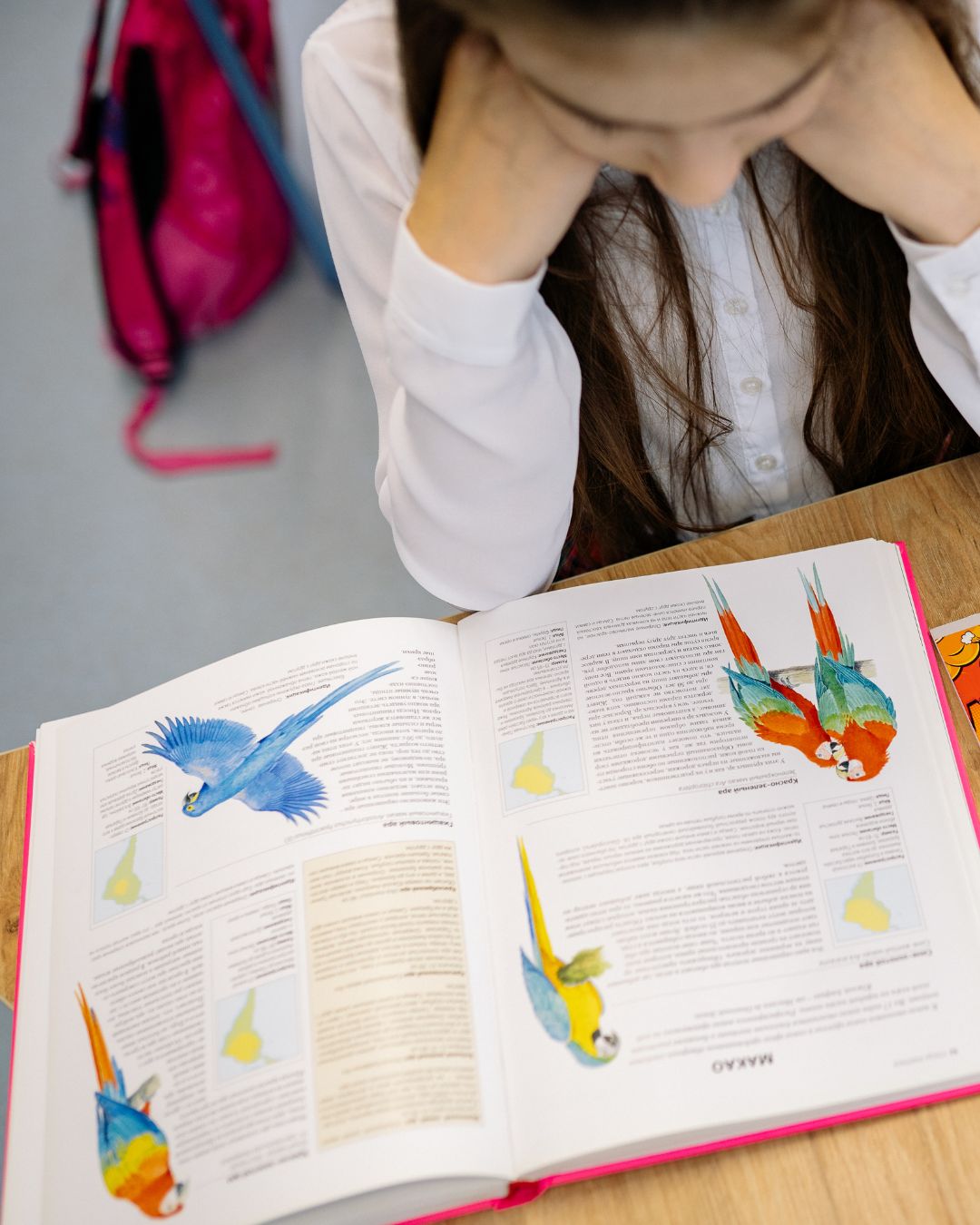
Emily was in Ms. Beth’s 4th grade class and loved storytelling. She actively participated in classroom discussions and had so much to say. However, during reading assignments, she struggled. Emily frequently misread words, mixed up letters, and had difficulty sounding out unfamiliar words. Her writing showed similar challenges, with poor spelling and sentence structure. Despite her intelligence and hard work, she was often frustrated and hesitant to read aloud in front of her peers.
Emily’s experience reflects the real-world impact of dyslexia in inclusive classrooms. It is not about a lack of intelligence or effort. There is a difference in how the brain processes language. While reading and writing are core components of education, dyslexia often makes these tasks particularly challenging. With the right support and interventions, students like Emily can make significant progress and achieve their academic goals.
By the end of this post, we will come back to Emily and talk about what her classroom started to look like once the right tools and supports were put in place.
The Science Behind Dyslexia
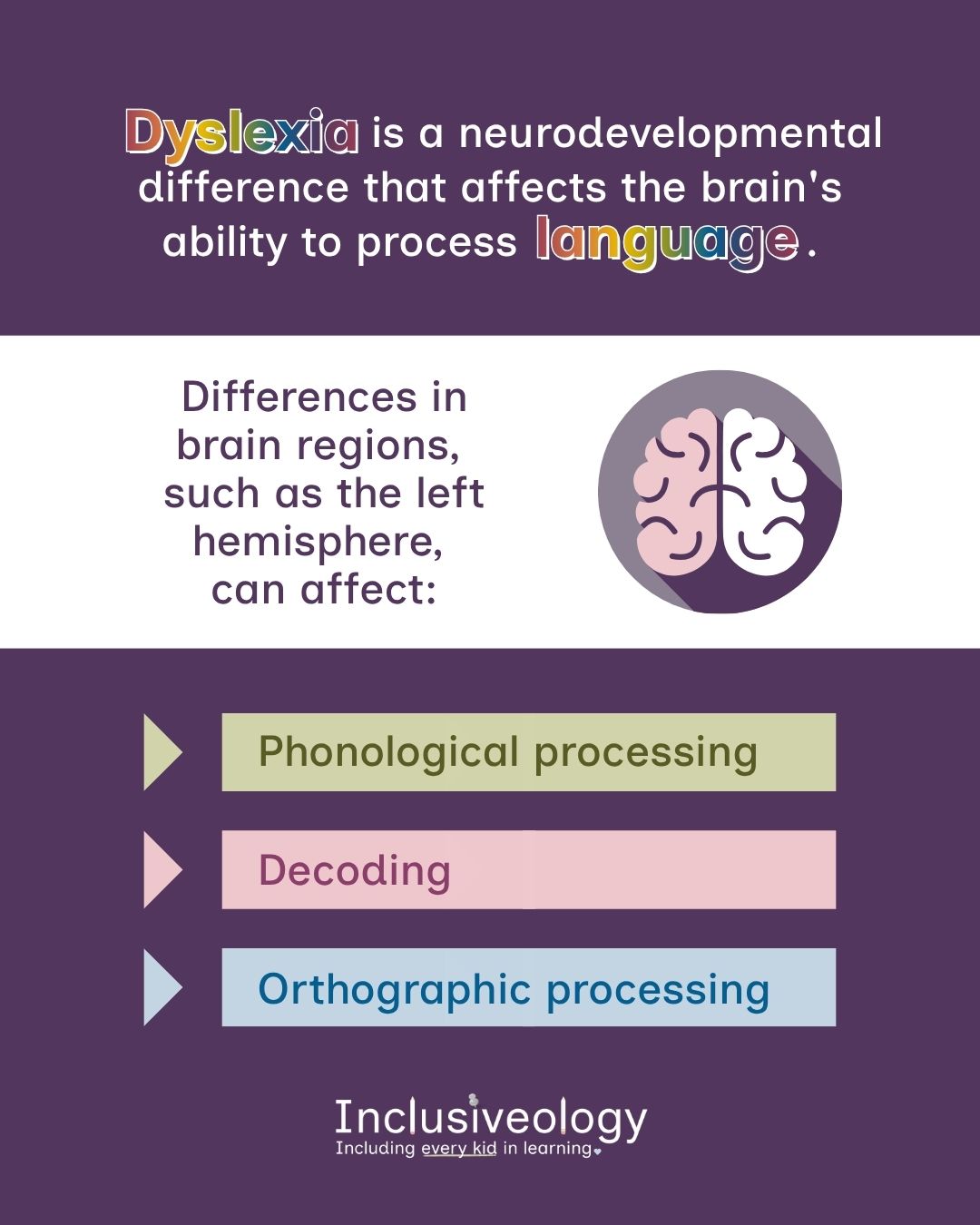
Dyslexia is a neurodevelopmental difference that affects the brain’s ability to process language. Scientific research has shown that individuals with dyslexia may have differences in specific brain regions involved in reading, such as the left hemisphere. These differences can affect:
- Phonological processing: the ability to recognize and manipulate sounds in language
- Decoding: translating written symbols into sounds
- Orthographic processing: recognizing word spellings
Understanding the science behind dyslexia helps us approach it not as a deficit, but as a different learning profile. By recognizing the underlying neurological basis, we can tailor our instruction and support to meet the unique needs of the learners who are already in our classrooms.
Practical Dyslexia Strategies for Teachers
Supporting kids with dyslexia requires a multi-layered approach that incorporates effective teaching methods, accessible tools, and a classroom culture rooted in belonging. Here is what that can look like.
Explicit and Systematic Phonics Instruction
One of the most effective approaches for students with dyslexia is explicit and systematic phonics instruction. This involves directly teaching the relationships between letters and sounds in a structured and predictable manner. Multi-sensory learning experiences, such as tracing letters in sand or using tactile materials, can enhance the effectiveness of phonics instruction.
For learners like Emily, strong phonics skills provide a foundation for decoding words and building fluency over time. This is not about going back to basics; it is about meeting kids where they are and giving them the tools they need to move forward.
Assistive Technology and Learning Tools That Remove Barriers
Assistive technology and learning tools are not just for students with IEPs. They are for every child who deserves to access learning in a way that works for their brain. These tools range from simple, low-tech solutions to more sophisticated options, and many of them are already available in your school.
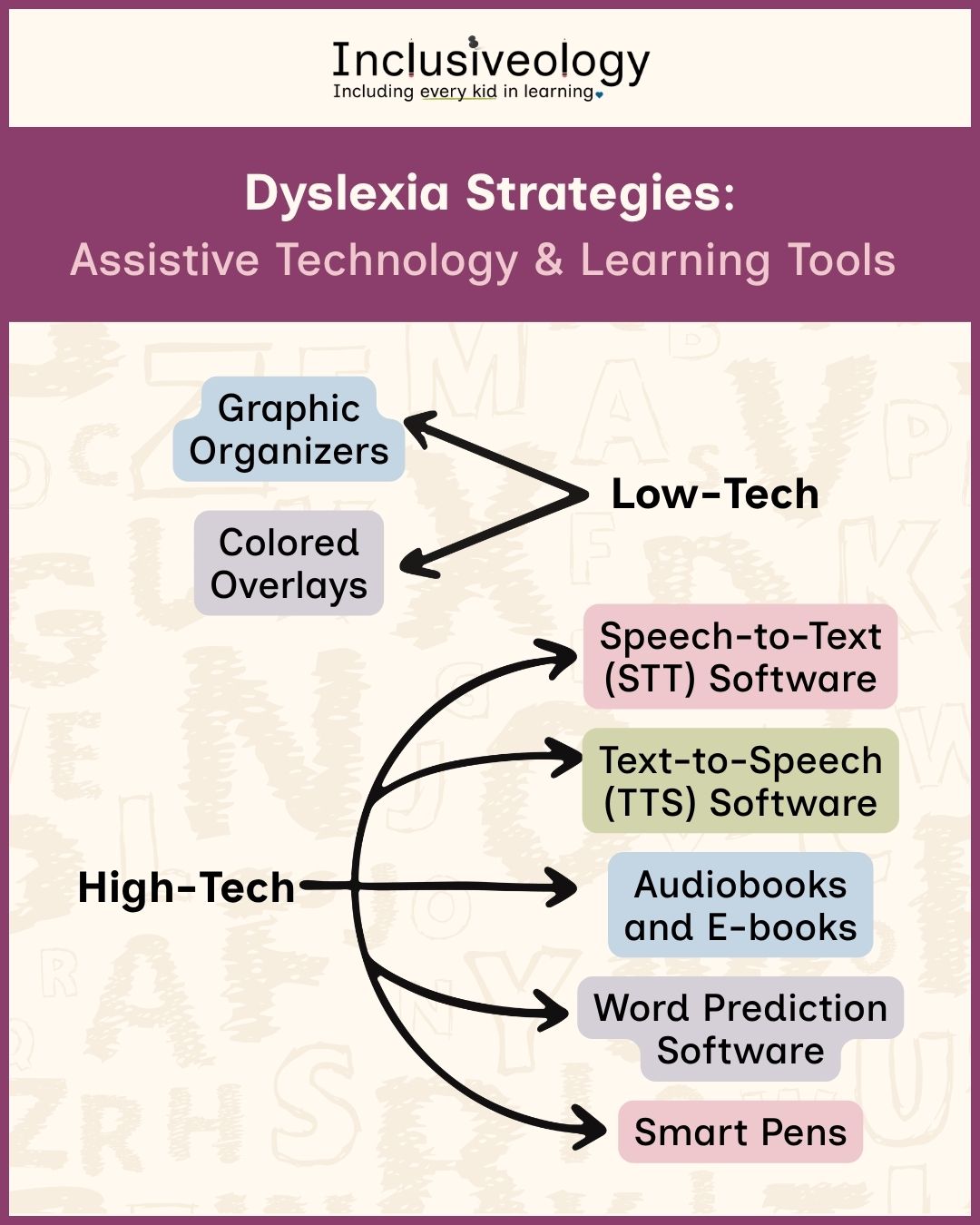
Low-Tech Dyslexia Strategies
- Graphic Organizers: Visual tools that help kids organize their thoughts and ideas before writing, making the writing process less overwhelming and more accessible.
- Colored Overlays: Some students with dyslexia find that placing a colored transparency over text improves readability. Color contrast can also be adjusted on laptop screens and other devices.
High-Tech Dyslexia Strategies
- Speech-to-Text (STT) Software: These programs allow students to dictate their ideas, which are then converted into written text. This removes the frustration of writing and allows kids to express themselves more effectively.
- Text-to-Speech (TTS) Software: These applications read text aloud, allowing learners to focus on understanding the content rather than struggling with decoding.
- Audiobooks and E-books: Listening to audiobooks gives students access to complex literature and information, bypassing reading difficulties without bypassing the learning.
- Word Prediction Software: These tools suggest possible words as students type, helping to improve spelling accuracy and writing speed.
- Smart Pens: Devices like smart pens can record lectures and discussions, enabling kids to review material later at their own pace.
Building an Inclusive Classroom Where Every Learner Belongs
In addition to practical strategies and the right tools, creating a supportive and inclusive classroom environment is what ties everything together. Here is what that looks like in practice.
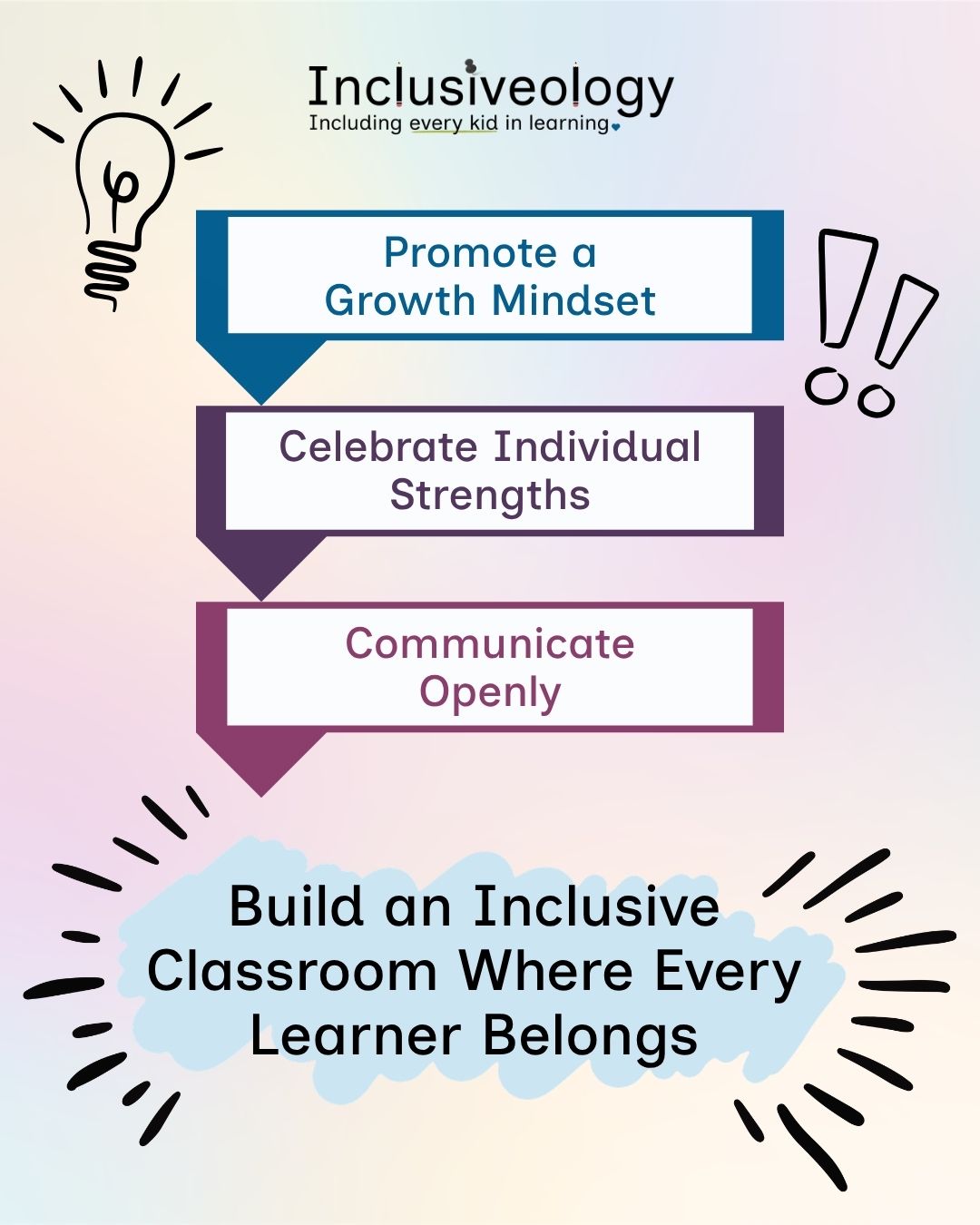
- Promote a Growth Mindset: Help kids understand that mistakes are part of the learning process and that effort matters. Encourage them to see themselves as capable learners who can find solutions with the right support.
- Celebrate Individual Strengths: Recognize and value the unique talents each student brings to the classroom. Encourage learners like Emily to explore their interests in areas where they excel, whether that is art, storytelling, music, or something else entirely.
- Communicate Openly: Maintain regular communication with families and fellow educators to ensure that everyone supporting the student is working toward the same goals.
Emily’s Dyslexia Strategies
Once Ms. Beth introduced colored overlays, text-to-speech software, and graphic organizers into her daily routine, something shifted. Emily was still working hard, but now she had a toolbox that matched how her brain works. She started participating in writing activities with less frustration. She stopped dreading read-aloud time. And the storytelling she had always loved? It started showing up in her written work too.
That is what happens when we stop waiting for kids to fit the system and start building systems that fit the kids.
When we provide learners with strategies and tools that remove reading and writing barriers, they can succeed, work independently, and feel less frustrated. We cannot keep leaving students behind because they learn differently.
Here’s what we can do instead: equip ourselves, build belonging, and keep every child in the learning. 💙
| Ready to build a toolbox that works for every learner in your classroom? Join the Inclusiveology community and get snuggled in. We have got the strategies, the tools, and the support you have been looking for. Join Us at Inclusiveology.circle.so/JoinUs |