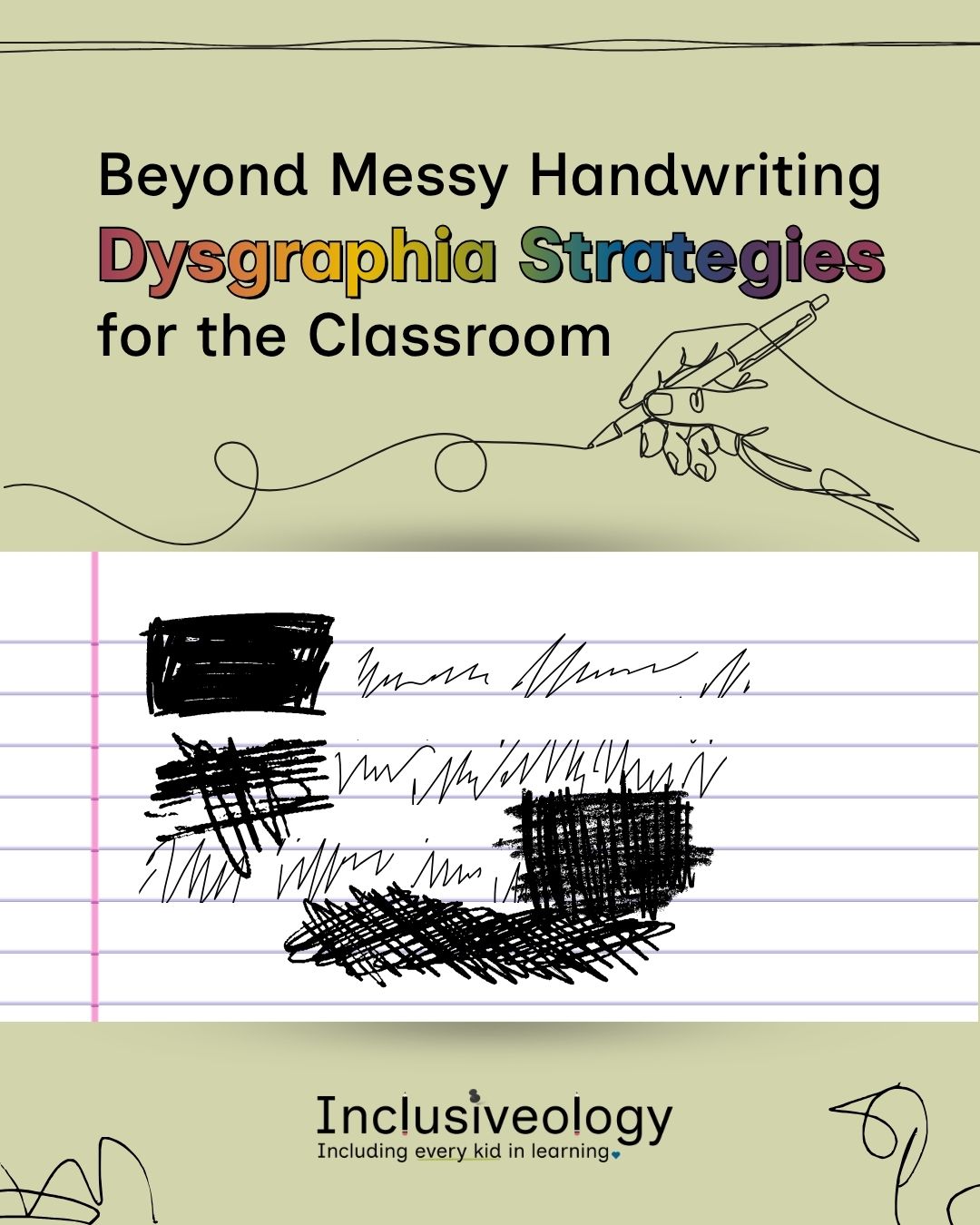
Dysgraphia in the Classroom: Beyond Just Messy Handwriting
Alex was engaged and well-spoken during class discussions, often contributing insightful points. But when it was time for independent writing, you could see the shift. The ideas that came so naturally in conversation seemed to disappear, replaced by frustration, avoidance, and very labored writing. His final paper, with incomplete sentences, illegible words, and inconsistent spelling, looked nothing like what Alex had shown of his understanding during discussions.
This is not about sloppy handwriting. Alex is likely dealing with dysgraphia, a specific learning disorder that fundamentally impacts writing ability. For teachers and school leaders, understanding dysgraphia, and knowing what to do about it, is essential to helping kids accurately demonstrate their knowledge and reach their academic goals. With the right tools and supports in place, students with dysgraphia can do exactly that.
What Is Dysgraphia? Understanding the Mechanics of Writing
Dysgraphia is a neurological condition that affects both the physical act of writing and the cognitive processes required for it. It goes well beyond poor handwriting, though that can certainly be one piece of the picture.
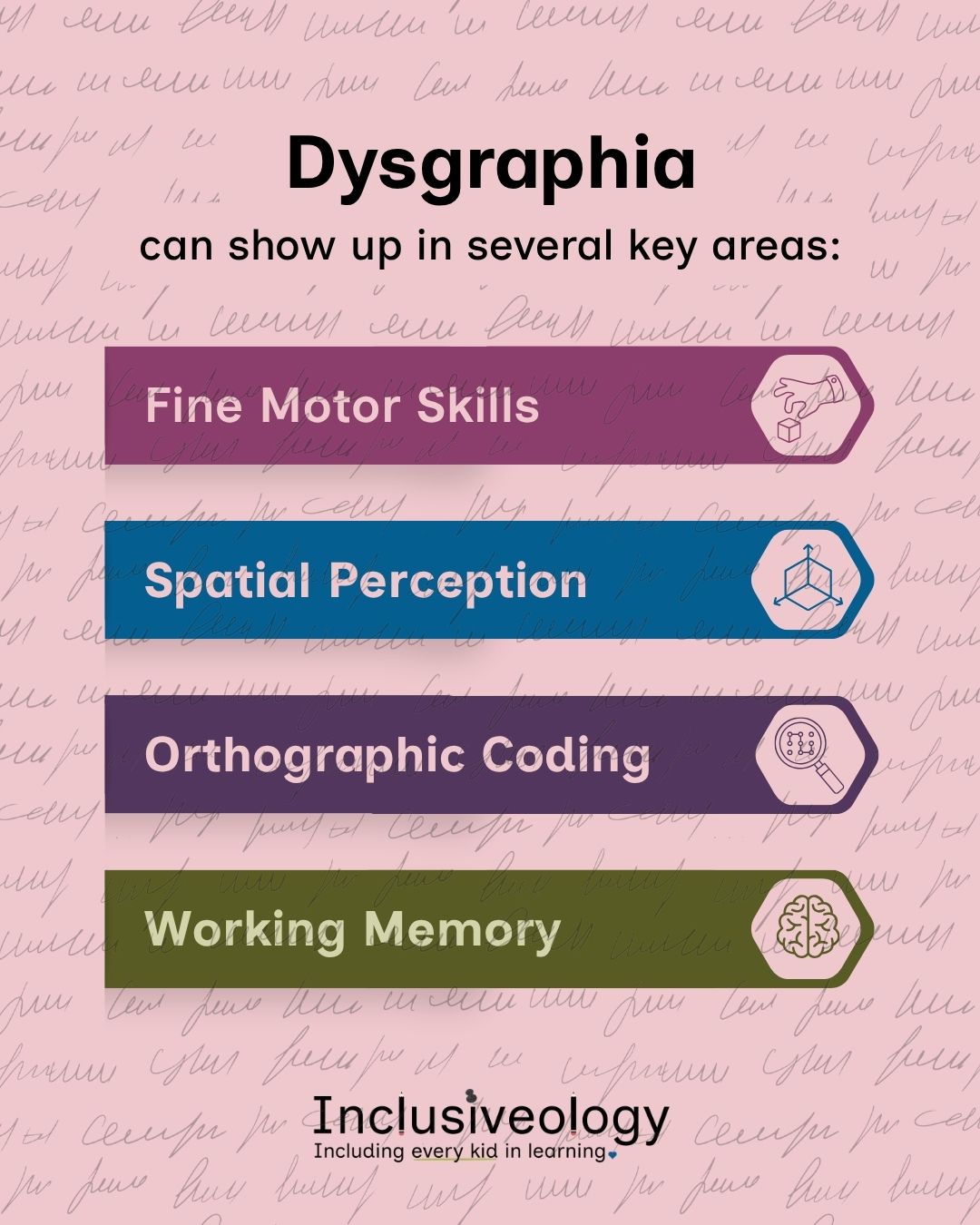
Dysgraphia can show up in several key areas:
- Fine Motor Skills. Coordinating the small muscles in the hands and fingers required for forming letters is genuinely difficult for these students. This often results in a poor pencil grip, fatigue, and pain after even short bursts of writing. For many kids, the act of writing is physically demanding in a way their peers simply do not experience.
- Spatial Perception. Some students struggle with the spatial layout of letters and words on a page. This can lead to irregular spacing between words, inconsistent letter sizes, and difficulty staying on lined paper.
- Orthographic Coding. This is the ability to store and retrieve the visual patterns of letters and words. Students with orthographic dysgraphia may struggle to form letters efficiently, mix up upper and lowercase letters, and have persistent difficulty with spelling, even for words they can spell aloud without hesitation.
- Working Memory. Writing asks a lot of the brain at once: spelling, grammar, punctuation, vocabulary, and the organization of ideas, all simultaneously. Students with dysgraphia often have a harder time managing all of these pieces at the same time, which can lead to disjointed sentences and incomplete thoughts.
Picture trying to write with your non-dominant hand while simultaneously planning and articulating a complex idea. That is a glimpse into the daily experience of a student like Alex.
Dysgraphia Strategies for Teachers: Tools and Supports That Work
The good news is that there is a full toolbox of ways to support students with dysgraphia. The key is providing accommodations and interventions that address both the physical and cognitive sides of writing. Expectations stay high; the tools simply remove the barriers that were getting in the way.
Instructional Strategies
How we approach instruction and assessment can make a meaningful difference for students with dysgraphia.
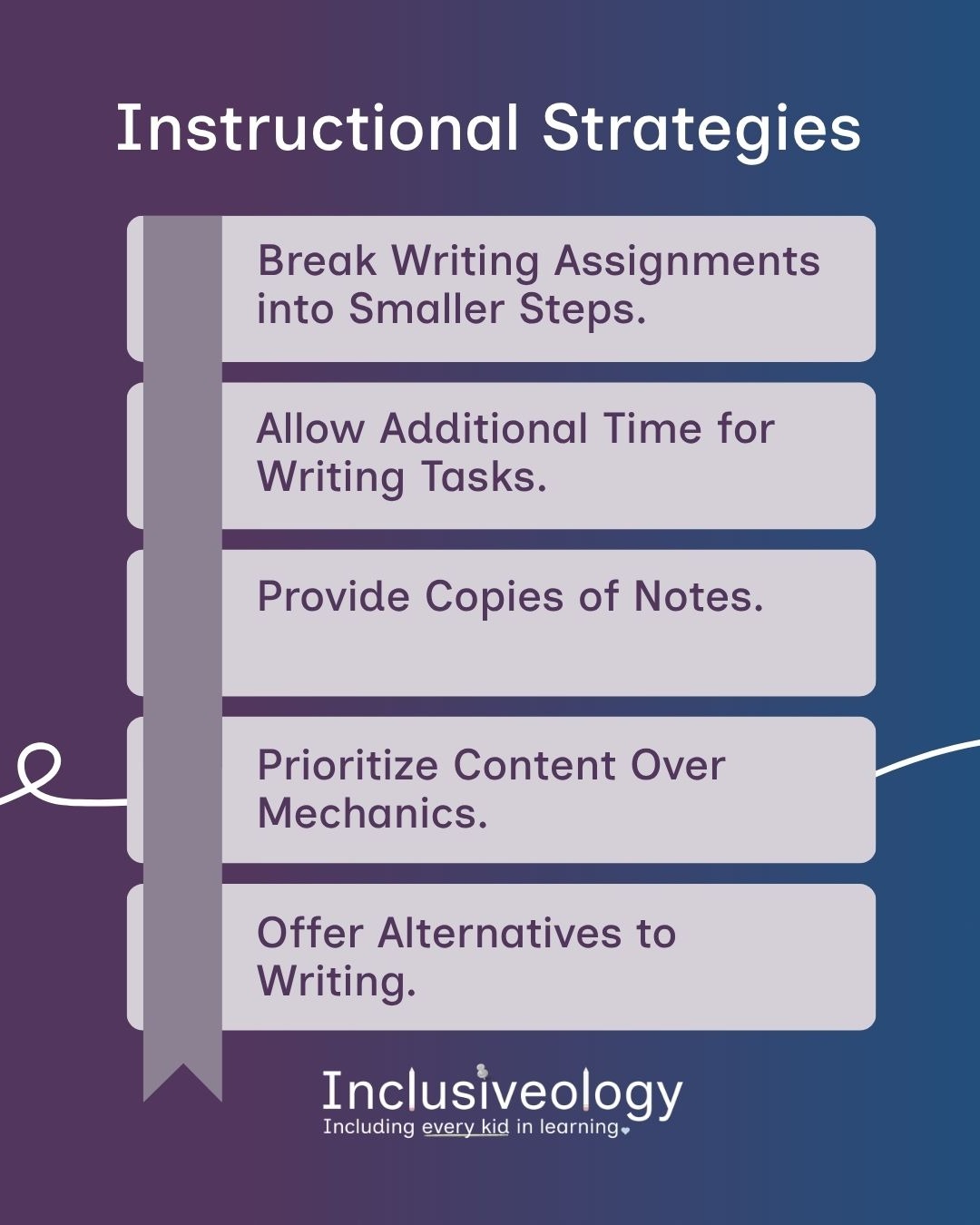
- Break Writing Assignments into Smaller Steps. Rather than one large assignment, chunk it into manageable pieces. Provide clear outlines, graphic organizers, and sentence starters to scaffold the process from the start.
- Allow Additional Time for Writing Tasks. The physical act of writing is slow and laborious for these students. Extra time reduces anxiety and allows them to focus energy on content rather than mechanics.
- Provide Copies of Notes. Taking notes during a lesson is a significant challenge for students with dysgraphia. Offering teacher-prepared notes, note skeletons to fill in, or a classmate’s notes lets students focus on listening and understanding, where they often excel.
- Prioritize Content Over Mechanics. When reviewing a rough draft, focus on the student’s ideas. Make it explicit that spelling and grammar will not factor into this stage of feedback. Students are far more willing to get their thoughts on paper when they know errors are welcome at this point in the process.
- Offer Alternatives to Writing. For some assessments, oral reports, presentations, or video projects are equally valid ways to demonstrate understanding. When the goal is to assess what a student knows about a topic, writing ability should not be the determining factor.
Low-Tech Tools
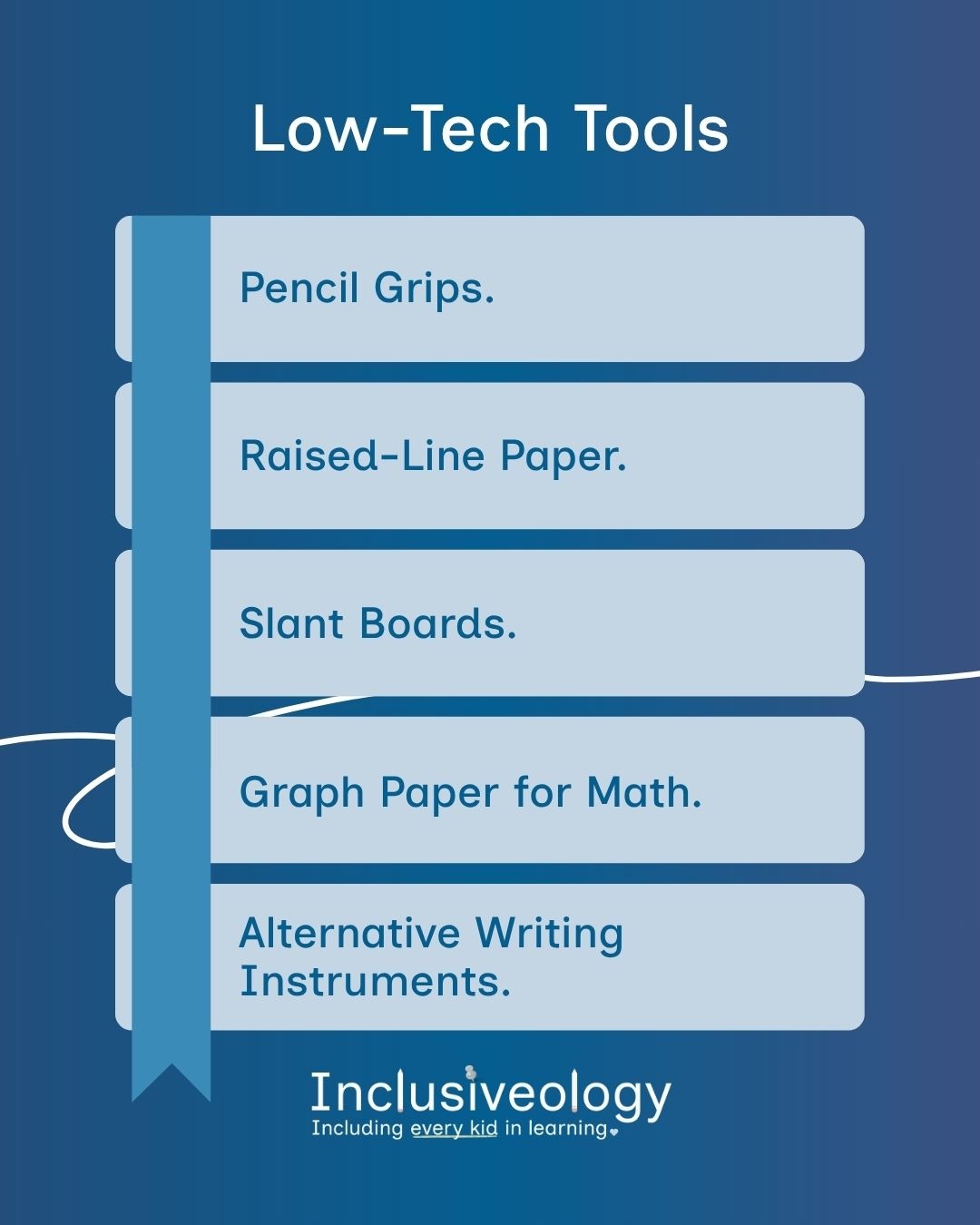
Sometimes the simplest changes open the biggest doors. Here are some effective low-tech supports to keep in your toolbox:
- Pencil Grips. Specialized grips help students achieve a more ergonomic and comfortable hold, reducing hand fatigue during longer writing tasks.
- Raised-Line Paper. This textured paper provides tactile feedback, giving students a physical cue to help them stay within the lines.
- Slant Boards. A slanted writing surface can improve wrist position and make the physical act of writing more comfortable.
- Graph Paper for Math. Large-square graph paper helps students align numbers and keep their work organized on the page.
- Alternative Writing Instruments. Some students find felt-tip pens, mechanical pencils, or thicker markers easier to manage than a standard pencil.
High-Tech Tools
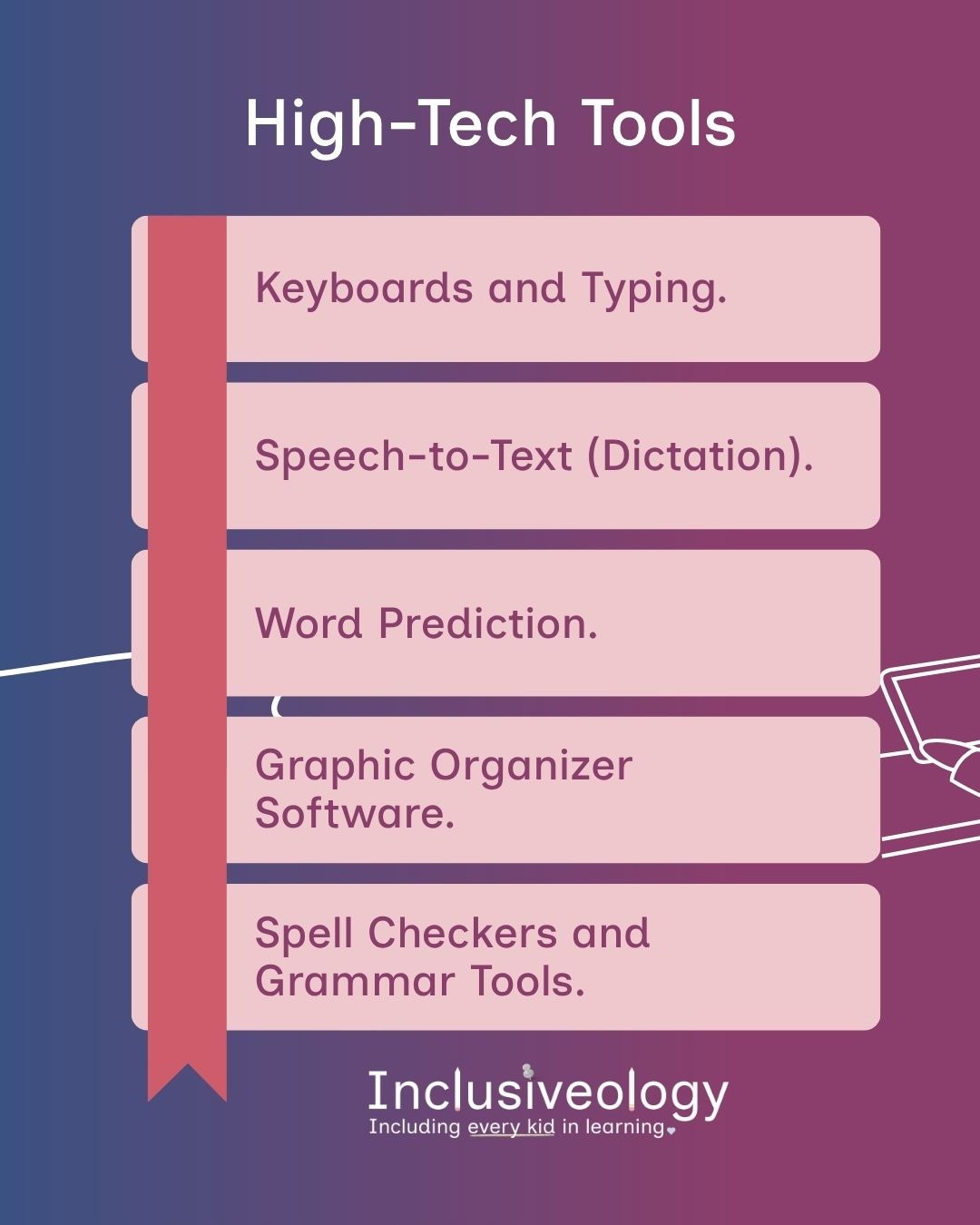
Technology can be a real difference-maker for students with dysgraphia. Here are some powerful options worth adding to the toolbox:
- Keyboards and Typing. Learning to touch type is an invaluable skill. While it still involves motor coordination, it is often far less physically taxing than handwriting. Ensuring students have consistent access to devices for typing assignments is a meaningful accommodation.
- Speech-to-Text (Dictation). Programs like Dragon NaturallySpeaking, or the built-in dictation features in Google Docs and Microsoft Word, allow students to speak their thoughts while the computer transcribes them. This bypasses fine motor challenges entirely, freeing students to focus on their ideas.
- Word Prediction. Many writing programs offer word prediction features that suggest words as the student types. This can speed up the writing process and provide meaningful spelling support.
- Graphic Organizer Software. Tools like Inspiration or mind-mapping apps help students visually plan and organize their writing before they begin typing, a natural bridge between thinking and producing.
- Spell Checkers and Grammar Tools. Tools like Grammarly provide an important layer of support, helping students catch errors that their brain might otherwise miss.
Building a Classroom Where Every Student Can Succeed
For students like Alex, naming the challenge is a meaningful first step. Building a supportive classroom environment means normalizing the use of these accommodations. Every student in the room can understand that some people use glasses to see clearly, and some people use a keyboard to write clearly. Every learner deserves the right tool for the job.
When students with dysgraphia have access to the tools and supports that work for their brain, writing stops being a barrier and starts being a bridge to showing what they actually know.
There is so much more in the toolbox. Let’s get started. 💙
| Ready to build a classroom where every learner can access learning in a way that works for their brain? Join the Inclusiveology platform and get snuggled in with coaching, inclusive strategies, and all the things your students need to thrive. Visit: Inclusiveology.circle.so/JoinUs to learn more. |