
From the Rug to the Table: How Small Group Instruction Levels the Playing Field
Ever finish a whole-group mini-lesson and scan the room… only to find a few eager hands, a large group of passive listeners, and a handful of students who got lost back at step one? And then there’s Michael, hood up, head down.
You’re not alone. Whole-group instruction is great for delivering general information, but it rarely changes the trajectory of learning for students with diverse needs. True differentiation happens at the small group table.
But not all small group time is created equal. Too often, it becomes a place for “re-teaching the same thing, just louder and slower,” or worse, a holding pattern while other students finish busy work. That’s definitely what not to do.
So, what does good small group instruction look like, particularly through the lens of inclusive education? It’s intentional, it’s data-driven, and it is the most powerful equity tool in your classroom.
The bonus? It benefits all of your students.
What Is Small Group Instruction in an Inclusive Classroom?
Strong small group instruction is defined by interaction. It moves beyond generic “guided reading” or static ability groups. Here is what sets it apart:
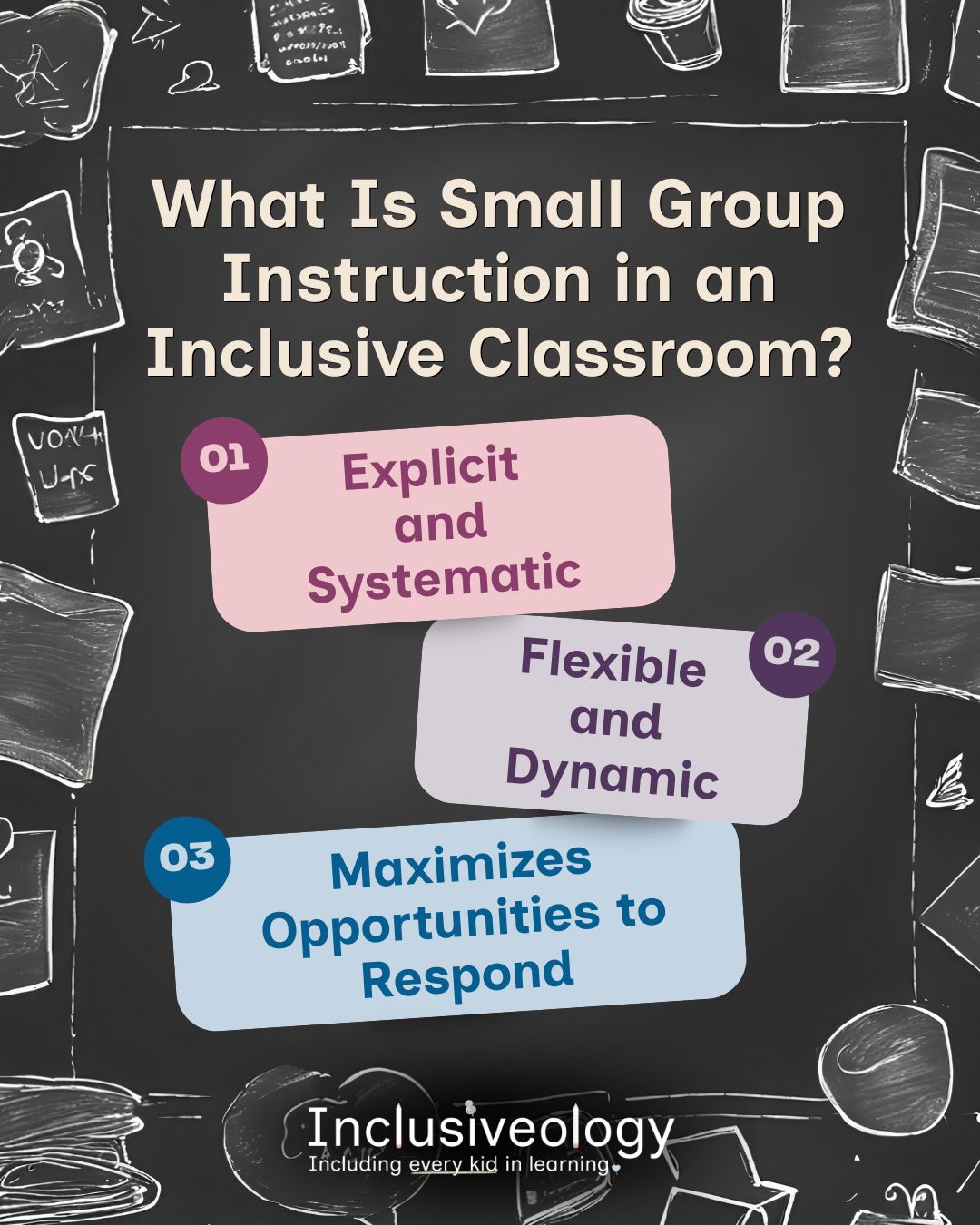
1. It’s Explicit and Systematic
Good small group instruction doesn’t beat around the bush. It identifies the exact breakdown in learning – whether it’s decoding multi-syllabic words, organizing a paragraph, or solving two-step equations – and addresses it directly.
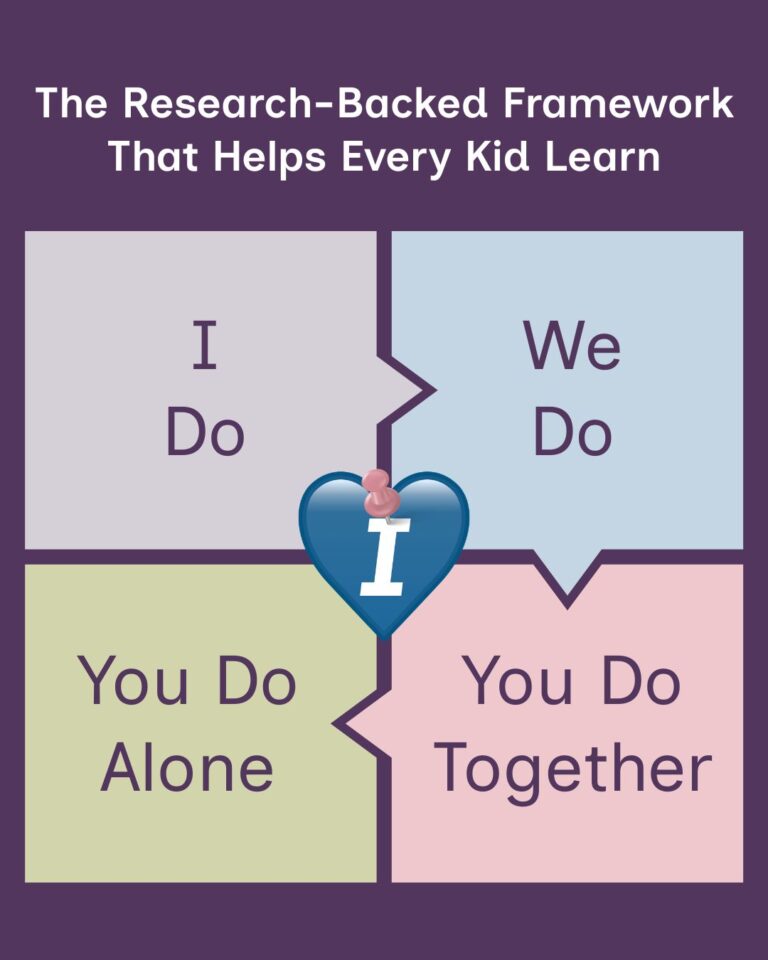
The Gradual Release Model is your best friend here: the teacher models clearly (I Do), guides practice (We Do), and monitors independent application immediately (You Do Together, then You Do Independently). No guessing. No assuming. Direct, intentional instruction.
2. It’s Flexible and Dynamic
The biggest mistake in small group instruction? Creating the “low group,” the “medium group,” and the “high group” in September and leaving them there until June. That is tracking, not teaching.
Strong groups are fluid. A student might be in an intervention group for phonics on Tuesday, but in an enrichment group for comprehension on Thursday. Read that again: the group exists to solve a specific problem. Once the problem is solved, the group dissolves.
3. It Maximizes Opportunities to Respond
In a whole-group setting, a struggling student might answer one question every twenty minutes. At a small group table of four students, that same student might respond – verbally, writing on a whiteboard, or using manipulatives – every 30 to 60 seconds. High engagement prevents checking out. It’s that simple.
Small Group Instruction for Students with IEPs and Neurodivergent Learners
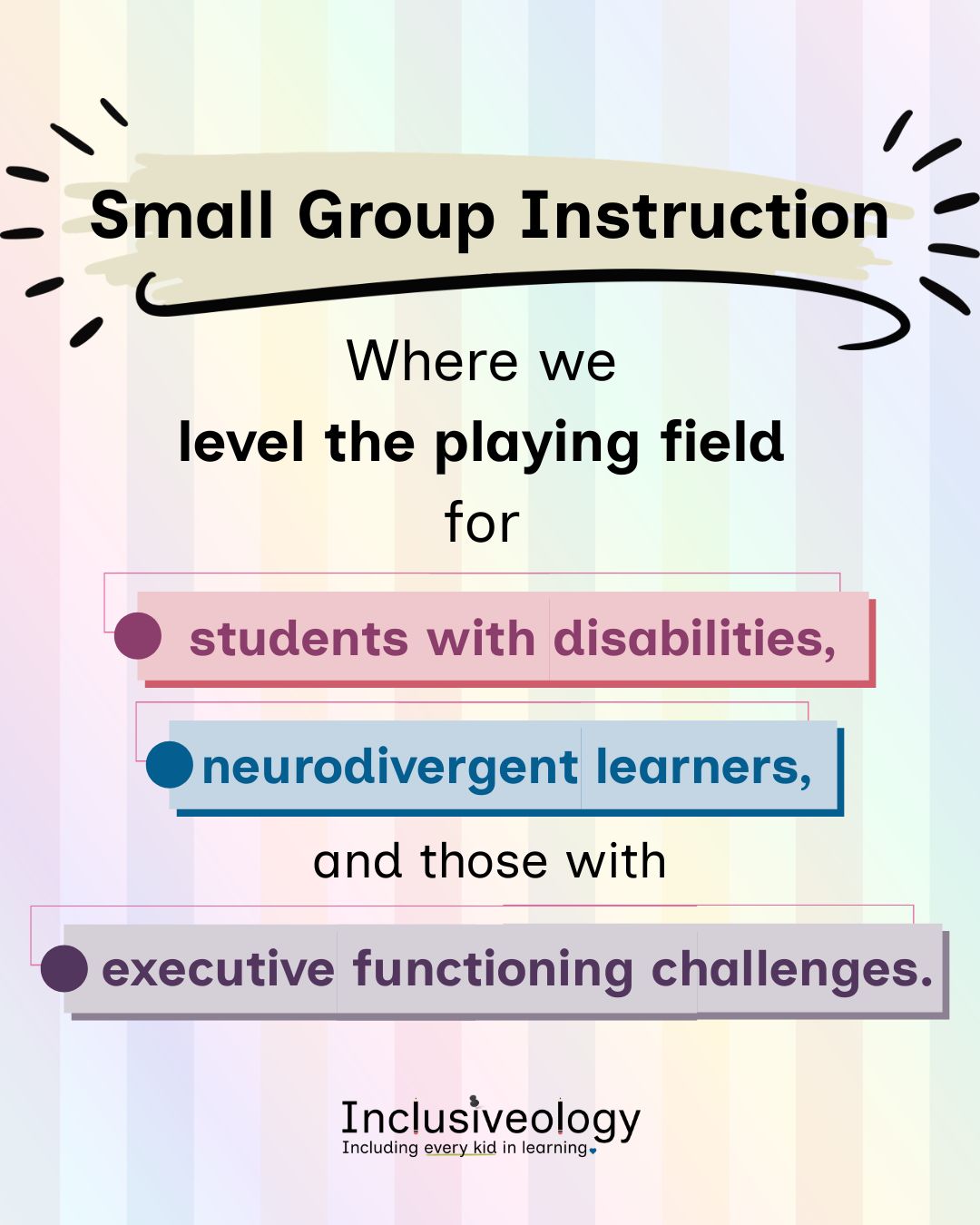
For students with disabilities, neurodivergent learners, and those with executive functioning challenges, the large classroom environment can be overwhelming, distracting, or simply moving too fast. Small group instruction is where we level the playing field.
Bridging the Gap for Students with Disabilities
For students with IEPs, the gap between their current performance and grade-level instruction can feel insurmountable. Small group instruction is the bridge.
It allows both general education and special education teachers to provide intense scaffolding, immediate feedback, and necessary accommodations – like read-alouds or graphic organizers – that aren’t feasible during whole-group time. It’s where IEP goals move from a piece of paper to actual practice, and ultimately, real-world application.
Supporting Neurodivergent Learners
The typical classroom demands sustained attention, a massive barrier for many neurodivergent minds. Small group instruction changes that equation.
For students with ADHD: Small groups offer novelty, proximity to the teacher, and rapid interactions that keep the brain engaged. The wait time is reduced, which means less time to zone out.
For Autistic learners: Small groups can provide a more predictable, structured environment with clear social expectations and visual cues for learning and focus. It’s a safer space to take academic risks without the pressure of the entire class watching.
Acting as the “External Brain” for Executive Functioning Challenges
Students who struggle with executive functioning often fall behind not because they don’t understand the content, but because they cannot manage the process.
In a whole-group setting, when you say, “Get out your materials, turn to page 45, and complete the odd numbers,” you’ve already lost students with executive functioning deficits before they’ve begun. At the small group table, you become their external support system. You break complex tasks into singular, manageable steps. You provide a checklist. You offer the immediate prompt needed to initiate. You make the “hidden curriculum” of how to do school visible and accessible.
How to Form Inclusive Small Groups Using Data (Not Guesswork)
If groups need to be flexible, how do you know who goes where today? You cannot rely on gut feelings or end-of-unit tests that come too late. You need real-time data.
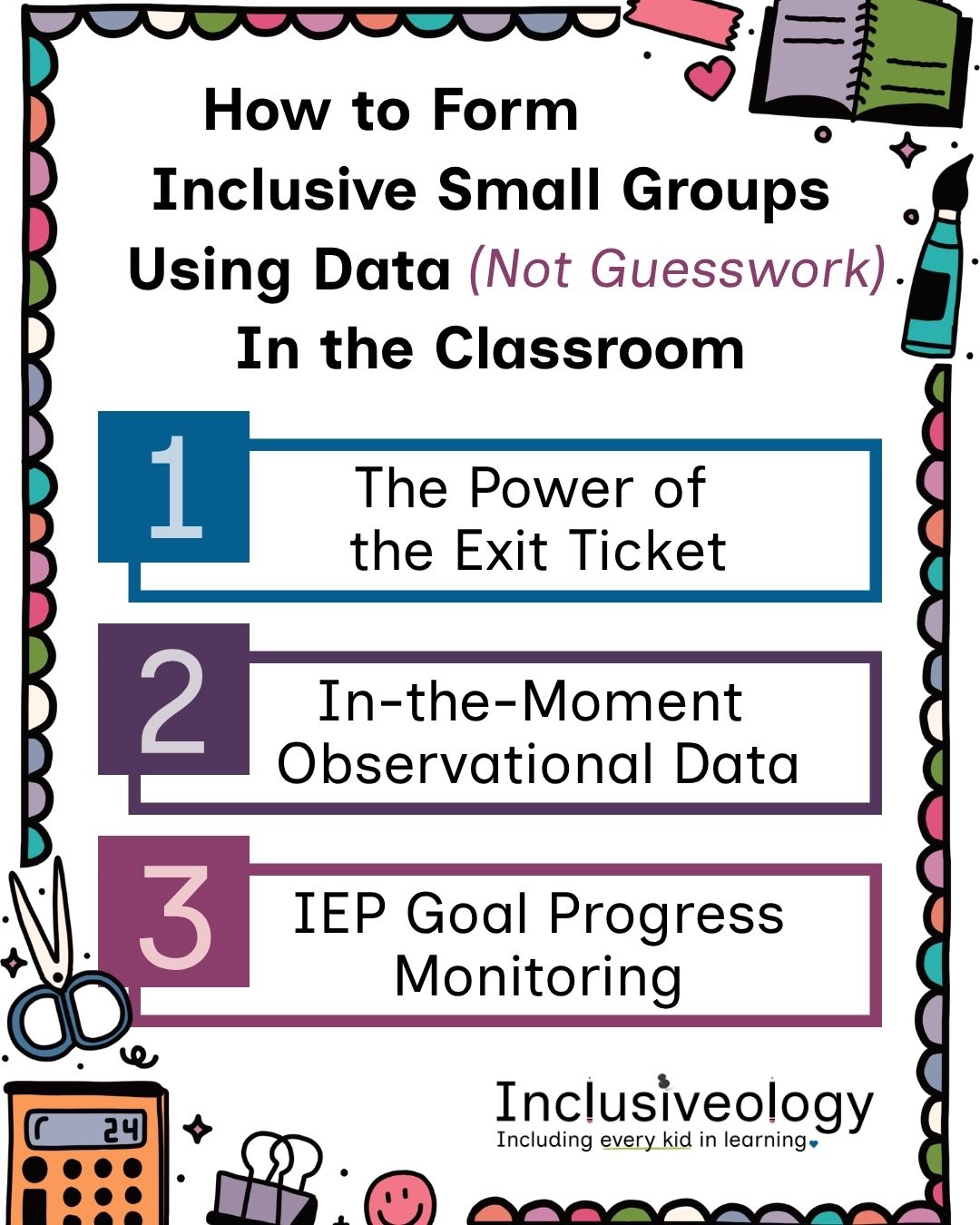
1. The Power of the Exit Ticket
At the end of a lesson, give a single-question exit ticket. Sort the results immediately into three piles: Got it, Almost got it, and No clue.
Tomorrow’s plan writes itself:
- “Got it” → extension activity
- “Almost got it” → quick check-in to clear up a misconception
- “No clue” → meets with you first for reteaching using a different approach
2. In-the-Moment Observational Data
Data doesn’t have to be a piece of paper. During independent work time, grab a clipboard and walk around. Notice patterns. Are five students stuck on the same vocabulary word?
Don’t wait until tomorrow. Call an impromptu five-minute “huddle” right now with those five students, clarify the concept, and send them back to work. That’s responsive teaching in action.
3. IEP Goal Progress Monitoring
For special educators, your data is already defined. If three students share an IEP goal related to a specific skill, pull them together twice a week for ten minutes of targeted practice on that skill until they master it. Consistency and repetition, without it feeling like punishment, is the goal.
Your Next Step: Building a Small Group Instruction Practice That Works for Every Kid
Moving from static grouping to dynamic, data-driven, inclusive small group instruction is a shift. It takes planning, strategy, and the right toolbox of resources.
If you’re a teacher, administrator, or instructional coach looking for concrete tools and professional development to make true inclusion a reality in your school, Inclusiveology is designed to be your hub for actionable inclusive practices.
From the whole-group rug to the small group table… and everything in between. We’re flexible like that. 💙