
The “We Do” Phase: Your Secret Weapon for Building Student Independence
Have you ever tried to learn something new – like a complex strategy game or a viral TikTok dance – and felt totally overwhelmed? You probably didn’t want someone to just do it for you, but you definitely didn’t want to be tossed into the deep end without a life jacket.
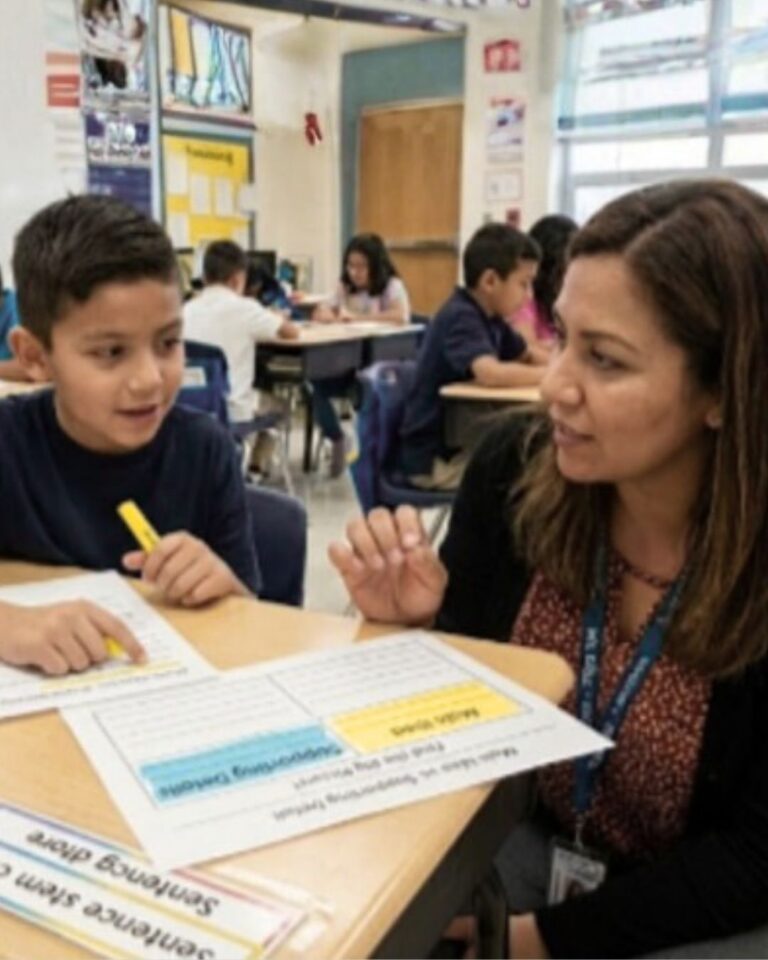
In the classroom, that “life jacket” phase is the “We Do” part of the Gradual Release Model. While the “I Do” is the demo and the “You Do” is the solo flight, the “We Do” is where the actual heavy lifting of learning happens. It’s the collaboration between you and your students that guides them in getting closer to doing a task alone.
Why the “We Do” Phase of the Gradual Release Model Is Key to Building Independence
The “We Do” phase is more than guided practice. Here is why focusing on this phase of the Gradual Release Model changes the game for student brains:
- It Builds Collective Efficacy. When kids work with you, they realize they aren’t the only ones “figuring it out.” This lowers the stakes and builds the confidence needed to eventually go solo.
- The Facilitator Shift. In this phase, you stop being the “sage on the stage” and become the “guide on the side.” You’re still holding the seat on the bike, but they’re finally starting to steer with the handlebars.
- A Safety Net for Every Learner. For neurodivergent kids, such as those with ADHD or dyslexia, the “We Do” phase prevents the “I’m not sure if I can do this” spiral before independent work even begins. By using visual scaffolds or peer support during this time, we remove the guesswork and keep the cognitive load manageable.

Guided Practice Strategies for the Gradual Release Model
So, how do you move students closer to independence without letting them fail? Here are two classroom examples that show the “We Do” phase in action.
Math: Multi-Step Word Problems
The strategy to use is a slowly reducing scaffold.
- Collaborative Solving: Instead of giving students a blank page, provide a graphic organizer on a shared digital board or a physical whiteboard.
- The First Problem: You and your students fill out the whole organizer together, debating which operations to use.
- The Second Problem: You provide the organizer but leave out the “final step” prompt. Kids work in pairs to finish it.
- The Third Problem: You provide only the “starting” box. Students must determine the rest of the structure with a partner.
By slowly reducing the scaffold during the “We Do” phase, you’re teaching autonomy alongside the Math concept itself. You are giving them the tools to ride their bikes solo.

Reading: Making Inferences
The same scaffolded approach works beautifully in literacy, too.
- Shared Text: Display a short passage on the board. Read it aloud together and model your thinking with a think-aloud.
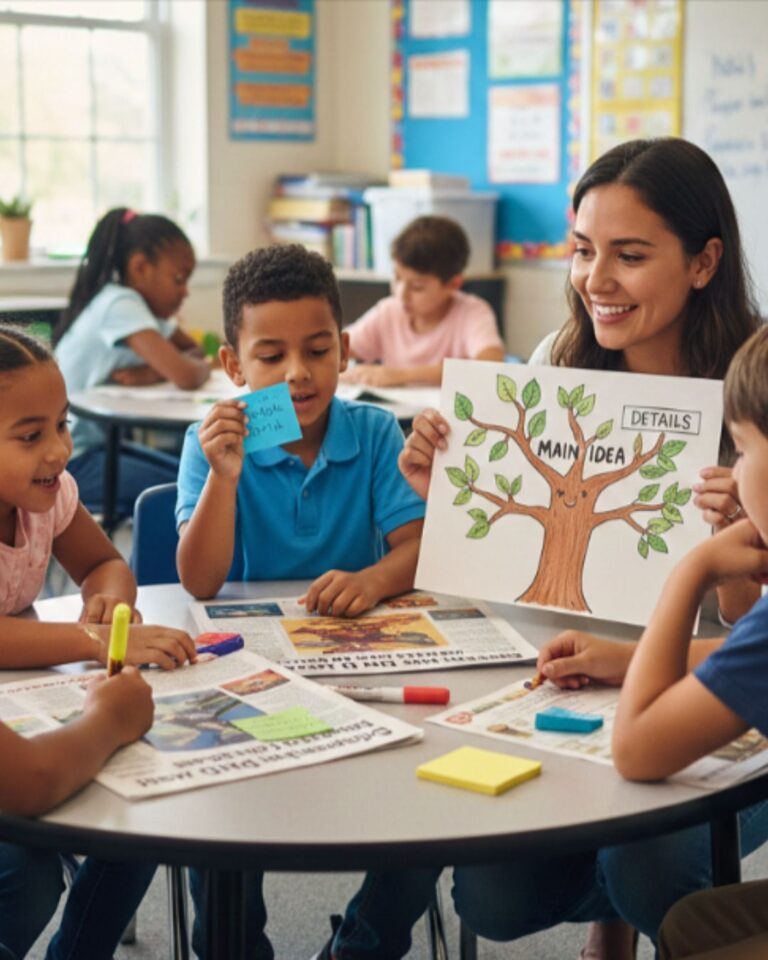
- Guided Annotation: Provide a simple annotation guide. Together, you and your students mark the text, identifying clues and discussing what they might mean.
- Partner Practice: Students work in pairs with a new passage and the same annotation guide, but this time you step back and circulate, asking guiding questions rather than providing answers.
- Gradual Release: On the final passage, students annotate with only a blank sticky note for their thinking. You’re nearby, but the work is theirs.
For neurodivergent learners, consider offering the annotation guide in a visual format, or pairing text-to-speech tools so every kid can access the passage independently. Learning tools aren’t just for kids with an IEP or a 504 Plan; they’re for every learner who deserves access to the content in a way that works for their brain.

The Purpose of Being the “Guide on the Side”
The “We Do” phase of the Gradual Release Model is about the shared struggle. You aren’t babying or hand-holding your kids. It’s the space where kids get to be “experts-in-training” before the training wheels come off entirely. It’s the difference between being told how to swim and actually feeling the water support you.
This phase also matters deeply for students with social and emotional support needs. When the classroom feels predictable and the learning feels achievable, kids show up regulated and ready. The “We Do” isn’t just an instructional strategy; it’s a belonging strategy.
Every Kid Gets to Say “I Got This”
Inclusiveology helps you shift instruction so your kids move from saying, “I have no clue what’s happening” to “I got this.” With toolkits designed to reach every learner and grow a positive, inclusive classroom culture, we focus on making Tier 1 instruction the foundation for student success.
Ready to get snuggled in and build a classroom where every kid says “I got this”?
Join us at Inclusiveology and explore the full toolkit for bringing the Gradual Release Model to life in your classroom. 💙